Midsleeper Bed
A midsleeper bed sits between a standard single and a high sleeper. Its mattress base is usually raised to around 110 to 140 cm from the floor, creating useful space underneath for storage, a desk or a play area while staying lower than a high sleeper, which is why it suits many children from about age 6 to 10.
For UK parents and families trying to make a smaller or shared child's bedroom work harder, it's often the point where one bed starts solving several problems at once. This guide looks at the features and benefits that matter in practice, including age suitability, safety standards, how to measure the room properly, mattress choice, materials and finishes, delivery and assembly, and how a midsleeper compares with options such as cabin beds and high sleepers so you can choose a bed that is safe, practical and right for your child.
What mid sleeper beds give you
A mid sleeper is a space-saving solution for small bedrooms, giving you more space in a child's bedroom. In a UK box room that's the difference between a bedroom you can play in and one you can only walk through.
Most of our mid sleepers use that space in one of three ways, and many models come in many designs with clever storage or room to study and play:
- Storage. Built-in storage can include built-in drawers, cupboards or shelves under the frame, replacing a separate chest of drawers and helping organise books, toys or clothes. See our beds with storage.
- A desk. Either fixed or pull-out, to create a study zone for homework and gaming while reducing the need for extra furniture. More in beds with desks.
- Play space. Open underneath to encourage imaginative play as a den or reading corner, and it can double as a chill-out zone at bedtime as well as during the day. Some models add a slide, which you'll find in beds with slides.
Mid sleeper or high sleeper?
Height is the difference, and it decides what fits underneath.
A mid sleeper at 110 to 140 cm is common in children's mid sleeper beds and usually gives around 70 to 80 cm of clearance, so most mid sleeper beds take drawers, a low desk, storage underneath or play areas underneath. A child can reach things underneath without crouching. It suits roughly ages 6 to 10.
A high sleeper at 150 to 180 cm takes a full-height wardrobe, a proper desk with a chair, or a sofa bed. It needs a ceiling of about 2.3 metres and suits older children and teenagers. Browse those in high sleeper beds.
If two children share the room, a bunk bed is the better use of the same footprint, because bunk beds stack sleeping areas vertically to save floor space.
Age guidance for children aged
The raised sleeping platform of a mid sleeper is for children aged 6 and over. That's set by BS EN 747, the British and European standard for raised beds, and it reflects the coordination and night-time awareness needed to climb safely by using short ladders or built-in steps. Mid sleeper beds are generally recommended from age six because the lower height and shorter ladder are safer for growing kids than higher raised beds, making them a perfect fit at this stage. Parents should always follow the manufacturer's age guidance and safety instructions on the product page.
For younger children, our toddler beds and beds for 3 years and over sit at floor level. Age guidance for each bed is on its product page.
Measuring up and storage underneath
Three measurements before you order:
- Ceiling height, taken directly above where the bed will stand. Your child needs room to sit up comfortably on the mattress.
- Floor space, including 50 to 60 cm clear in front of the ladder, and room for any drawers to open fully.
- Access, since mid sleepers arrive flat-packed in several long boxes and getting them upstairs matters.
Full dimensions are on every product page. If you're unsure, send us your room measurements and we'll tell you what fits.
The right mattress
Mattress depth is a safety figure on a raised bed, not just a comfort one. Guard rails sit a set height above the mattress surface, so a mattress that's too deep reduces that clearance.
Most mid sleepers take a standard UK single at 90 x 190 cm, which is a standard single bed in UK sizing, with a maximum depth of 15 to 16 cm. Some European brands use a continental single instead, so it's worth checking the dimensions on the product page. The mattresses shown with each bed are the ones we recommend for it, matched to the right size and within the depth limit. Browse the range in kids' mattresses, or read our kids' mattress size guide.
Shorter rooms may need a shorty bed, which takes a 75 x 175 cm mattress and saves 15 cm of length. Those need shorty mattresses rather than a standard single.
Materials and finishes
Most of our mid sleepers are wooden, either solid pine or a wood-effect finish, with sturdy construction that stands up well to daily use, and a solid frame helps provide maximum stability. Wood takes a painted finish that can be touched up years later and carries integrated drawer weight well, making it a smart choice for built-in storage in kids cabin beds. Our solid pine kids' beds collection shows which frames use solid Scandinavian pine.
Metal beds are slimmer in profile and generally less expensive, which suits a very compact room.
On colour, our most popular finishes are white, grey and natural pine, which are also among the most popular styles in the range. They suit more than one style of room and still look right when the child is a teenager. Put the personality into bedding and wall art, which cost a fraction to change.
Safety
We ask every manufacturer we work with to confirm that all mid sleeper beds meet UK safety standards for children's furniture, and we hold that confirmation on file. Where a bed is certified to BS EN 747, the British standard covering guard rail height, gap sizes, ladder stability and structural strength, it says so on the product page.
What matters once the bed is in the room:
- Safe access with a sturdy ladder
- Guard rails fitted on all open sides, secure and without movement
- Mattress within the stated maximum depth
- Nothing hung from the frame
- One child on the straight ladder at a time, and no jumping from the platform
- Fixings re-tightened every few months, and after any move
More detail on our bed safety guidance page.
Delivery and assembly
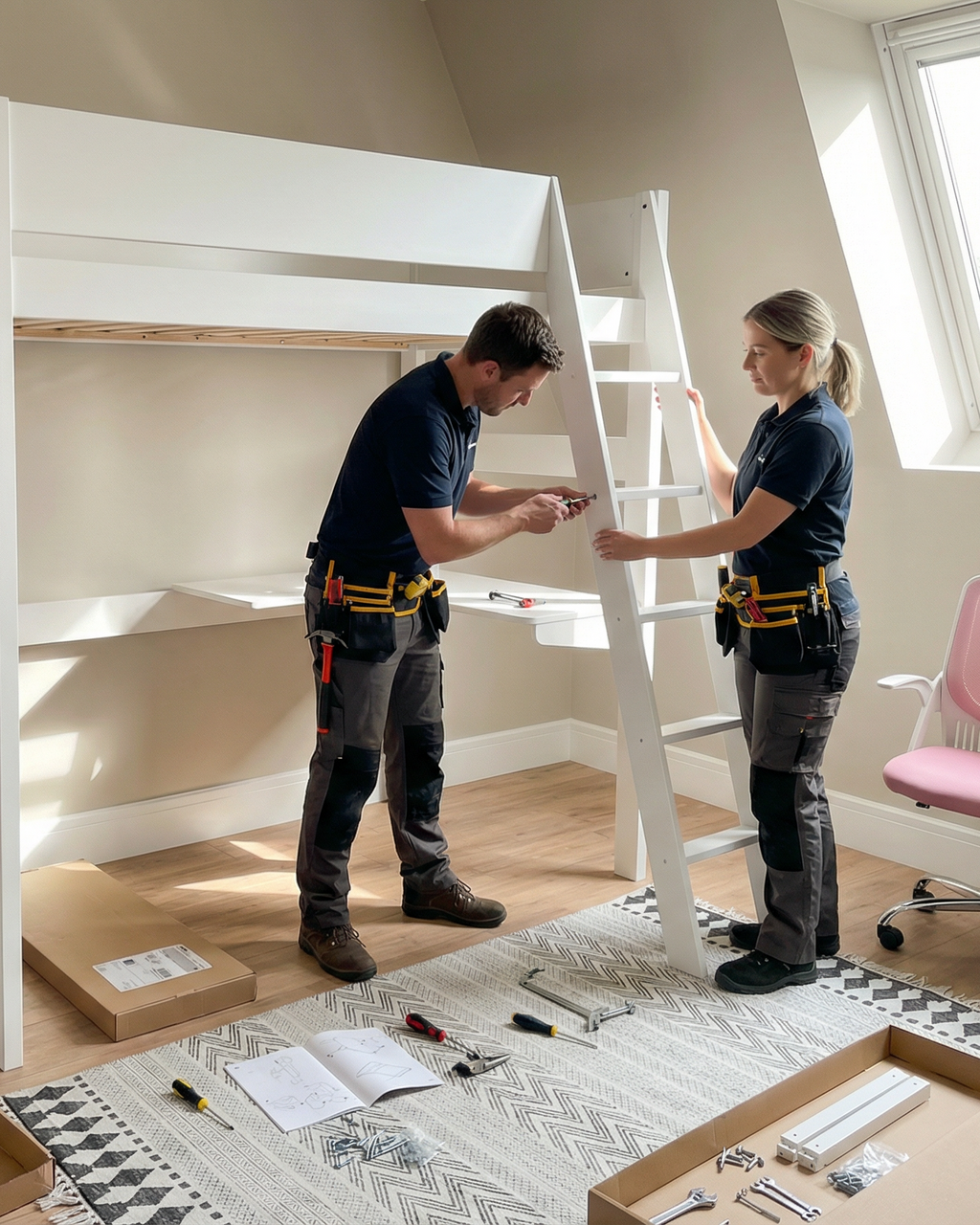
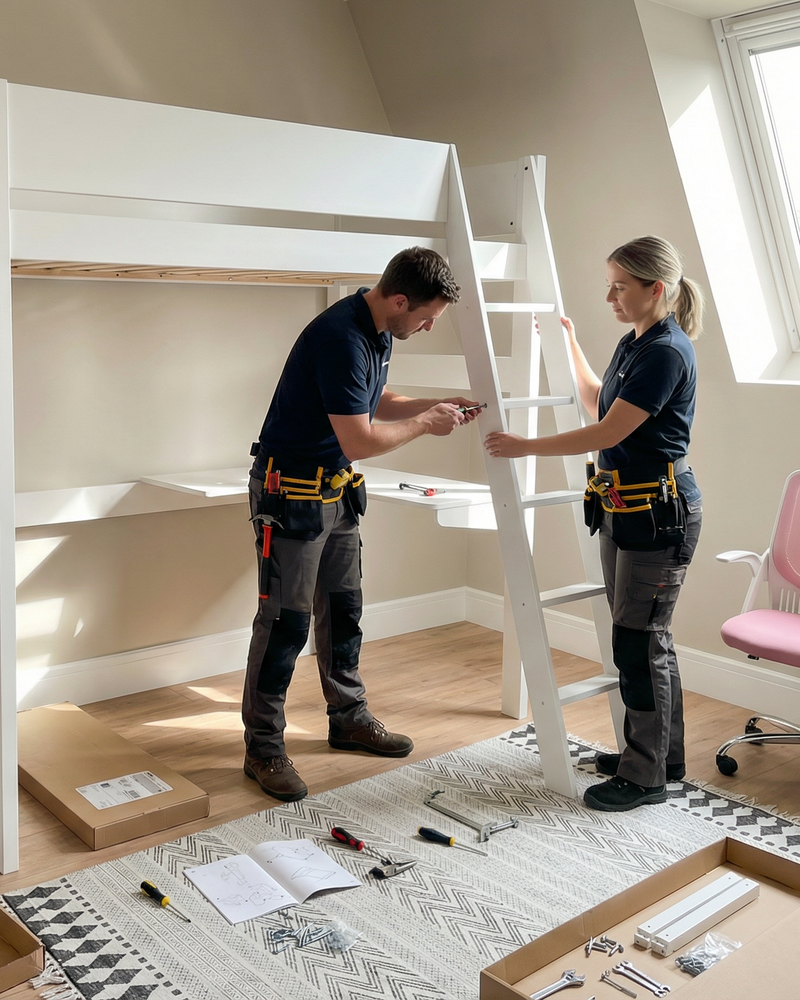
Mid sleepers arrive flat-packed. Free delivery is available to UK mainland addresses. Allow two adults and around two hours. Some models qualify for next day delivery, and check individual product listings for full details on our room-of-choice assembly service, including where we build the bed and packaging removal.
Common questions
What age is a mid sleeper suitable for? Generally recommended from age six for the raised sleeping platform, as set by BS EN 747. Most mid sleepers suit children between roughly 6 and 10, and are often the perfect fit before a high sleeper, giving children a comfortable place to sleep while making better use of the room.
How high is a mid sleeper bed? Typically 110 to 140 cm to the mattress platform. The exact height is on each product page.
What's the difference between a mid sleeper and a cabin bed? They overlap. Kids cabin beds are usually lower and more enclosed, with storage built into the frame rather than open space underneath. A mid sleeper usually has a more open sleeping area and more usable underneath space.
Can I put a desk under a mid sleeper? Yes, if the model allows for it. Some include a fixed or pull-out desk, while others use the area below for extra storage or leave it open so you can add your own. This can be a smart way to free up floor space and avoid extra furniture. Check the underbed clearance on the product page. That can help you decide if it is the right fit for your child's room.
What mattress does a mid sleeper need? Usually a standard UK single at 90 x 190 cm, maximum 15 to 16 cm deep. Shorty models take 75 x 175 cm.
Are mid sleepers safe? Yes, when used as intended. What matters is the age guidance, the correct mattress depth, guard rails on all open sides, and fixings checked regularly. Safe sleep also depends on using the right mattress, following the age guidance, and keeping the ladder and fixings secure. Some models are also fun because the space below can double as a den or reading spot.


 Hemel Hempstead, UK
 support@millieandjones.co.uk
 020 8264 0042