


The best teenage beds for small rooms do more than one job. If the ceiling allows, a high sleeper with a sofa bed or desk underneath fits a bed, a study space and somewhere for friends into one footprint. If it doesn't, an ottoman bed or a day bed with a trundle gives you storage or a spare bed at normal height. And if your teenager is tall, choose a continental single (90 x 200cm) for extra length without using any more floor.
A teenager needs three things from a bedroom that a younger child doesn't:
Somewhere to work
A proper desk for homework, revision and a laptop.
Somewhere to put everything
Clothes, school kit, hobbies and the rest.
Somewhere friends can sit
A room they can hang out in, not just sleep in.
In a small bedroom, a single bed plus a wardrobe and a chest of drawers leaves almost no floor. So the bed has to do more than one job.
On this page
Start with length, not width
This is the measurement most people get wrong at this age. A bed should be around 10 to 15cm longer than the person sleeping in it, and a standard UK single is 190cm long. Plenty of teenagers pass 180cm before they finish growing, and once they do, a 190cm bed stops being comfortable.
A continental single, at 90 x 200cm, gives an extra 10cm of length for no extra width, so it costs you nothing in floor space. If your teenager is already tall, or has tall parents, buy the longer bed now rather than replacing it at sixteen. Several of our high sleepers take a continental single, including the Chelsea and Kensington.
The catch: a continental bed needs a continental mattress, as a standard 190cm one leaves a gap at the end. Our kids' bed size guide explains every size.
The four options that work best
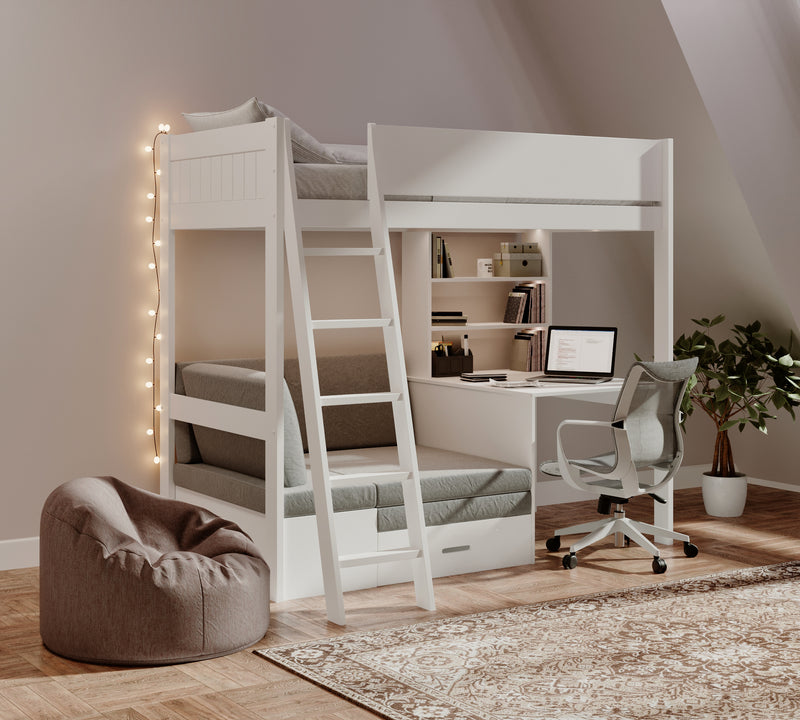
1. High sleeper with a sofa bed
Best for: teenagers whose friends come round
The bed goes up, and underneath is a sofa a friend can sit on during the day and sleep on at night. For a teenager, a room friends can come round to matters more than an extra drawer, which is why this is the bed that makes a box room work socially.
Our best-selling high sleeper, the Windsor, pairs a sofa bed with a desk, as do the Oxford and the Chelsea. See all high sleepers with sofa beds.
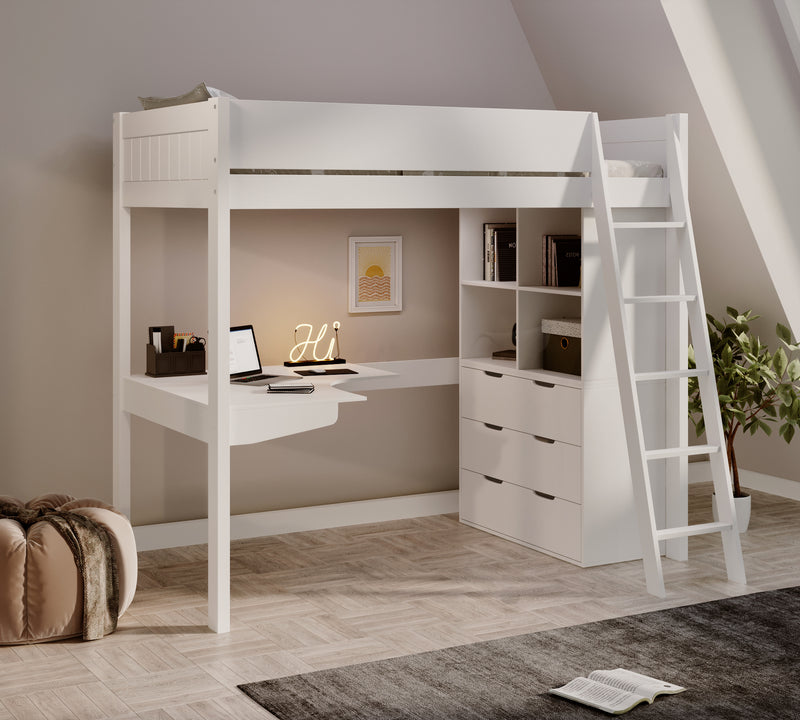
2. High sleeper with a desk
Best for: teenagers with plenty of homework
If study is the priority, a full desk underneath beats anything you could fit alongside a normal bed. Check the desk length and depth on the product page rather than assuming: a laptop, a monitor and an open textbook need more room than a laptop alone.
The Cambridge has a long corner desk, and the Kensington adds a wardrobe. See all beds with desks.
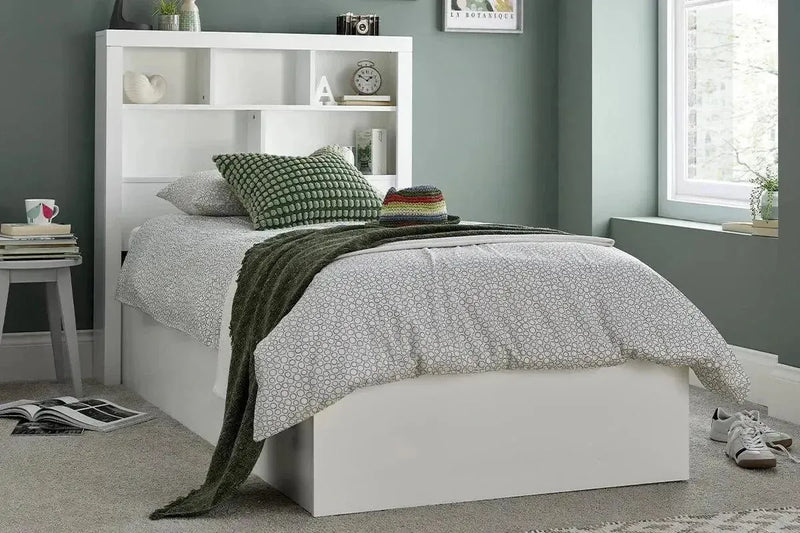
3. Ottoman bed
Best for: the most storage at normal height
The whole mattress platform lifts on gas struts, giving you the entire footprint of the bed as storage, more than any drawer system. It stays at normal bed height, which suits a teenager who's stopped wanting to climb a ladder, or a room where a raised bed won't fit.
The Oscar adds a bookcase headboard, and the Sloane comes in single and larger sizes. See all ottoman beds.
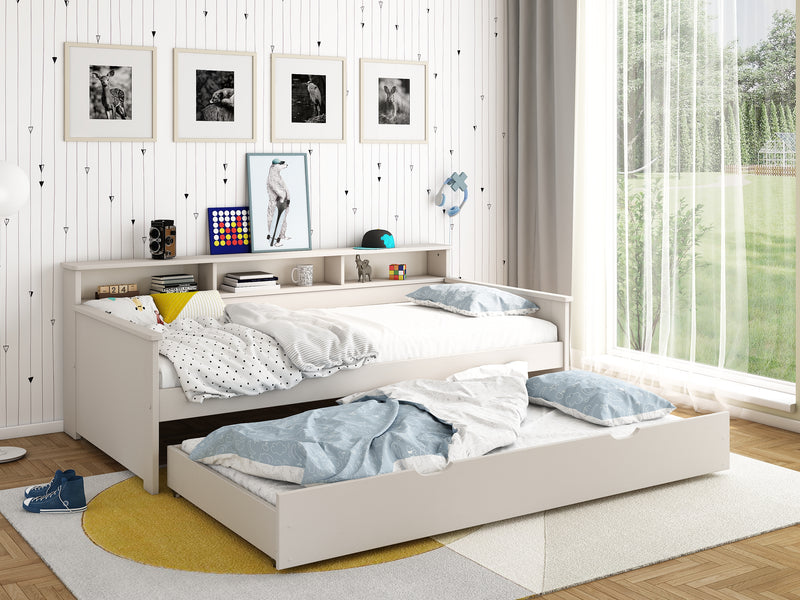
4. Day bed with a trundle
Best for: rooms that double as a place to sit, and sleepovers
It sits against the wall like a sofa during the day and pulls out into two beds at night, so there's a spare bed without a permanent second bed in the room.
The Burford storage daybed comes in cashmere with a trundle, and the Nordic daybed adds drawers. The Sienna guest bed, our best seller, works the same way. See all day beds.
Gaming beds
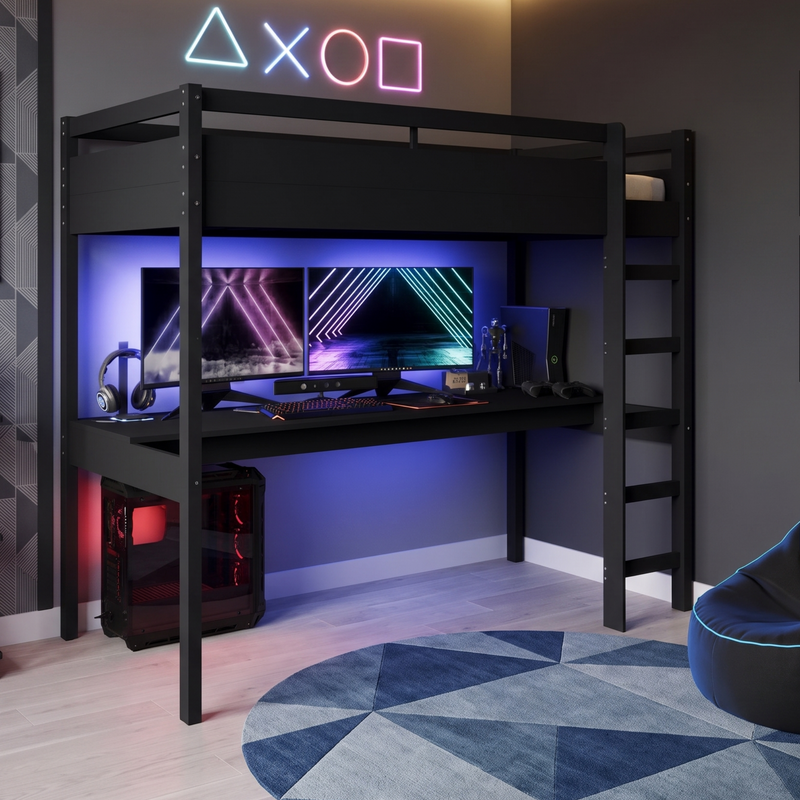
Worth treating separately, because the needs are specific: a desk deep enough for a monitor, somewhere to route the cables, and room for a chair to roll back.
A high sleeper with a gaming desk underneath gives a proper setup in the footprint of a bed. Check two things: the desk depth, since a monitor needs more than a laptop, and the clearance above the desk, as the underside of the bed can sit lower than you'd expect.
The Jax has a full-width desk, and the Alderley adds a sofa bed and wardrobe. See all gaming beds.
When a high sleeper isn't right
Honest caveats, because this is where regret happens.
- Headroom. Measure from the top of the mattress to the ceiling. A teenager needs roughly 80 to 90cm to sit fully upright, and a standard high sleeper under a 2.4m ceiling won't always give that. If they like sitting up in bed, that matters.
- Making the bed. Changing sheets at height is genuinely awkward, and it's one of the most common complaints about high sleepers.
- Whether they want one. Some teenagers love a raised bed. Others think it's childish. Ask before you spend the money.
If any of those apply, a Mini Highsleeper gives the same under-bed setup about 30cm lower, or a single bed with storage at normal height lasts well into adulthood.
The mattress changes too
On a high sleeper, the maximum mattress depth doesn't change with age: it's usually 15 or 16cm, because the guard rail height is measured from the top of the mattress. Stick to the bed's stated maximum, with a 15cm mattress like the MemoryDream 15.
On a normal bed, you can go deeper. An 18cm mattress gives noticeably more comfort for a taller, heavier body, and it's one of the real advantages of a floor-level bed for a teenager. Our MemoryTeen 18 is made for exactly this. See our guide to the best single mattress for kids.
Getting more out of a small room
- Go vertical everywhere. Wall shelves above the desk, and hooks rather than a chair for clothes.
- One large piece beats three small ones. A high sleeper with built-in storage replaces a bed, a desk and a chest of drawers, and looks less cluttered than all three.
- Keep a clear route to the door. It's what makes a room feel bigger than the furniture count suggests.
- Let them choose the colour. A bed they picked gets looked after.
Before you order
- Measure the ceiling where the bed will go, not at the highest point of the room.
- Check the length against how tall they are now and how tall they're likely to get.
- Check the desk depth and clearance if there's a workspace underneath.
- Ask them. A teenager who wasn't consulted about their own bedroom will let you know about it.
- Order the mattress at the same time, and check the maximum depth if the bed is raised.
For more ideas by room type, see our guide to kids' beds for every room layout.
Common questions
What size bed does a teenager need?
A standard single, 90 x 190cm, works for most. If they're tall or likely to be, a continental single, 90 x 200cm, gives an extra 10cm of length without taking more floor space.
Are high sleepers suitable for teenagers?
Yes, and they're a very popular choice. Check the headroom above the mattress, and be aware they'll be making the bed at height. Our guide to the types of high sleeper compares them.
What's the best bed for a small teenage room?
A high sleeper with a sofa bed or desk underneath, if the ceiling allows. If not, an ottoman bed gives the most storage at normal height.
Should I buy a small double for a teenager?
Only if the room genuinely takes it. At 120 x 190cm it's noticeably roomier, but it uses up the floor space that makes a small room work. See our small double guide.
What mattress depth for a teenager?
On a normal bed, 18cm or more is fine and more comfortable. On a high sleeper or bunk, stick to the bed's stated maximum, usually 15 or 16cm.
How long will a teenage bed last?
A continental single with storage can take them through to leaving home. That's the one to buy if you'd rather not do this again.
Beds that work as hard as the room
High sleepers with sofa beds and desks, ottoman beds, day beds and more.
Shop teenage bedsStill deciding? Read our kids' bed buying guide.