


A cabin bed is a bed with storage built into the frame underneath it, usually drawers, cupboards or shelves. That's the whole definition, and it covers a wider range of heights than most people realise, from barely above a normal bed to a raised mid sleeper.
The height matters, because it decides what a bed is suitable for, and the terms in this category are genuinely confusing. Retailers use cabin bed, mid sleeper, low sleeper and storage bed almost interchangeably. Here's how they actually differ.
On this page
The four types, from lowest to highest

1Storage bed
Height: Normal bed height
Underneath: Drawers
Age: Any age

2Low cabin bed
Height: A little above a normal bed
Underneath: Drawers, cupboards, shelves
Age: Check the product page

3Mid sleeper
Height: Around halfway up
Underneath: Drawers, shelves, often a pull-out desk
Age: 6 and over

4High sleeper
Height: High enough for a desk or sofa underneath
Underneath: Full desk, wardrobe or sofa bed
Age: 6 and over
"Cabin bed" is the loosest of the four terms. It's used for anything from a floor-level bed with drawers up to a raised mid sleeper. When you're comparing beds, look past the label to the height of the sleeping platform.
Age suitability
Mid sleepers, high sleepers and the top bunk of a bunk bed are raised beds, and they're for children aged 6 and over. That's the guidance in BS EN 747, the British standard for bunk beds and raised beds.
Storage beds and low cabin beds sit at or close to normal bed height, so that restriction doesn't apply in the same way. Suitability then depends on the individual design, so check the age guidance on each product page. It's set for that specific bed, which makes it more reliable than any general rule.
If you take one thing from this: the height of the sleeping platform matters more than the name. Check the height, then check the product page.
Low cabin beds
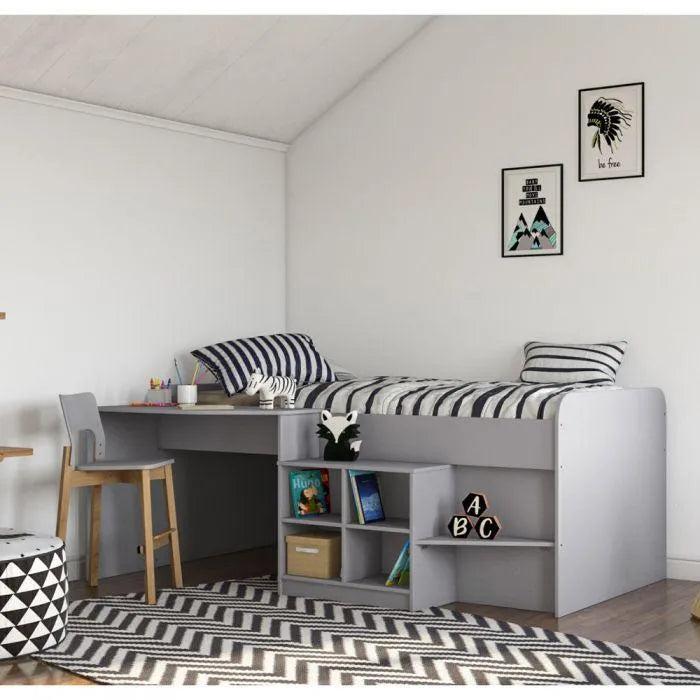
Storage without the height
Drawers, cupboards and shelves are built into the frame, with the mattress sitting only a little above normal bed height, so there's no climbing. The Voyager has two open shelves and a two-door cupboard, and the Navigator adds a built-in desk and bookcase.
For the most storage at a low height, the Pioneer has four drawers and two cupboards. See all cabin beds.
Mid sleepers: the next step up
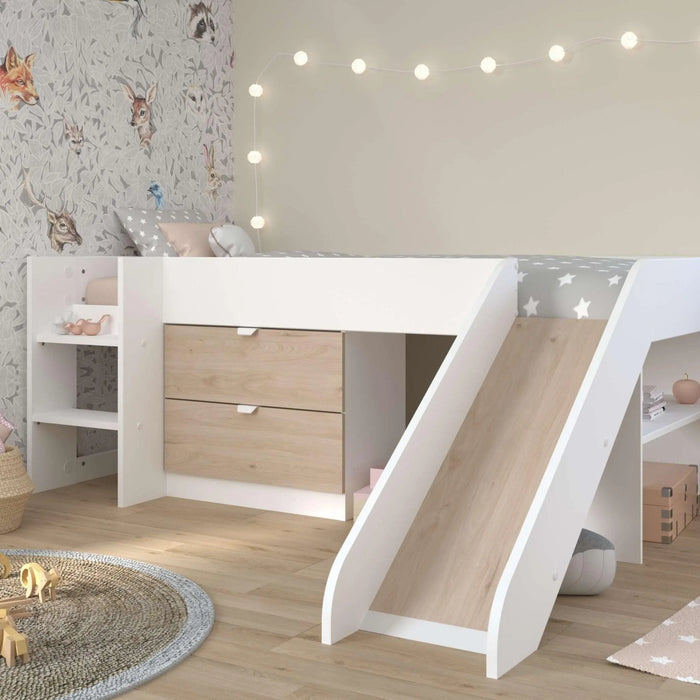
Room for a desk as well as storage
Higher again, with room underneath for a pull-out desk as well as drawers and shelves. They're still well below high sleeper height, so easier to climb and make, and less imposing in a small room. The Girona has two cupboards, drawers and a pull-out desk, and the Winchester has freestanding drawers and shelving you can rearrange.
Others include the Eli, Tenby and Bramley, and the Tobo adds a slide. See all mid sleepers, or our guide to cabin beds with desks.
Need a full desk, wardrobe or sofa underneath? That's high sleeper territory. Our guide to the types of high sleeper compares them.
How much storage do you actually get?
Worth being realistic, because the marketing photos always show a tidy room. A typical cabin bed with three or four drawers holds roughly what a chest of drawers holds. That's clothes, or toys, not both. If your child has a lot of everything, a mid sleeper with a taller frame gives you more, or you'll still want a wardrobe.
What a cabin bed genuinely does is remove one piece of furniture from the room. In a box room, that's the difference between a floor you can play on and one you can't. Our guide to single beds with storage compares the options in more detail.
What to check before buying
- The height of the sleeping platform. It decides suitability, and it's often buried in the dimensions rather than the title.
- The age guidance on the product page. Set for that specific bed.
- Drawer runners. Metal runners glide and last; cheap plastic ones can stick within a year.
- Which side the drawers open. If the bed goes against a wall, drawers on that side are useless. Some beds are reversible, some aren't.
- Space in front of the drawers. A drawer needs room to open fully, usually 50 to 60cm, and that floor has to stay clear.
- Maximum mattress depth. If the bed has guard rails, there'll be a limit, usually 15 or 16cm. Our 15cm kids' mattresses are made for this.
Common questions
What is a cabin bed?
A bed with storage built into the frame underneath, usually drawers and cupboards. Heights range from barely above a normal bed up to mid sleeper height.
What's the difference between a cabin bed and a mid sleeper?
Height, and what fits underneath. A low cabin bed has drawers and cupboards close to the floor. A mid sleeper is higher, with room for a desk as well.
What age is a cabin bed for?
It depends on the height. Mid sleepers and high sleepers are for children aged 6 and over. Low cabin beds and storage beds sit near normal bed height, so check the age guidance on the product page, as it varies by design.
Are cabin beds good for small rooms?
Yes, it's what they're for: one piece of furniture instead of two, and the floor space back. Our guide to beds for every room layout has more ideas.
Can you use a normal mattress on a cabin bed?
Match the size to the frame. If the bed has guard rails, check the maximum depth first, usually 15 or 16cm.
Is a cabin bed better than a high sleeper?
They suit different situations. A high sleeper gives far more usable space underneath, but it's for 6 and over. A low cabin bed gives you storage at a lower height.
Do cabin beds come apart for moving?
Most flat-pack beds can be taken apart, but the drawer units are the awkward part. Keep the instructions.
Find the right cabin bed
Low cabin beds, storage beds and mid sleepers with desks, drawers and cupboards.
Shop cabin bedsStill deciding? Read our kids' bed buying guide.