


The best type of high sleeper depends on what you want in the space underneath. Choose one with a desk for homework, a wardrobe and shelving for a small room, a sofa bed for sleepovers, or a full-width desk for gaming. For most children aged 6 and over, a high sleeper that combines a desk with storage or a sofa bed gets the most out of the room, which is why our best-selling Windsor pairs a desk with a pull-out sofa bed.
Below, the seven main types compared, who each one suits, and what to check before you buy.
On this page
The seven types at a glance
| Type | Best for | Examples |
|---|---|---|
| Open underneath | Flexible layouts you can change as they grow | Any high sleeper, plus your own desk or chair |
| With a desk | Homework and older children | Pure, Cambridge |
| With storage and a wardrobe | Small rooms that need everything in one | Kensington, Wilton, Highgate |
| With a sofa bed | Sleepovers and a place to relax | Windsor, Oxford, Chelsea |
| Gaming | Screens, consoles and a proper desk | Little Folks Edit, Alderley |
| Mini and staircase | Younger children and lower ceilings | Mini Highsleeper, Marlow |
| L-shaped twin | Two children sharing a room | Harrow |
The seven types of high sleeper
1. High sleepers that are open underneath
Best for: flexibility and changing layouts
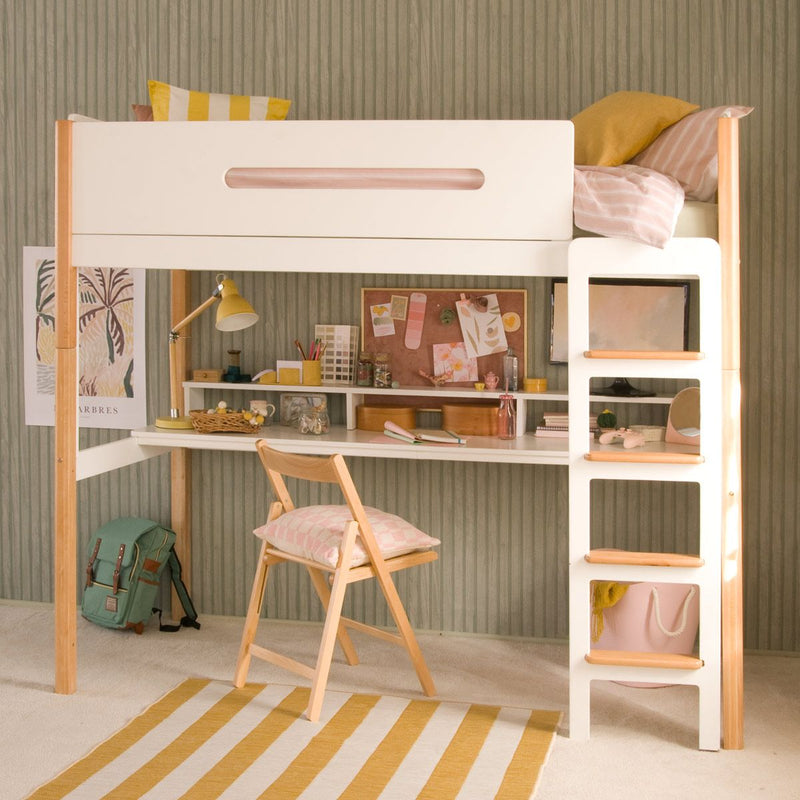
The simplest design: a raised bed with a clear space below that you fill yourself. Add a freestanding desk, a beanbag, a bookcase or storage boxes now, and change it as your child's needs change. It's a good choice if you already have furniture you want to use, or if the room layout might change later.
2. High sleepers with a desk
Best for: homework, reading and older children
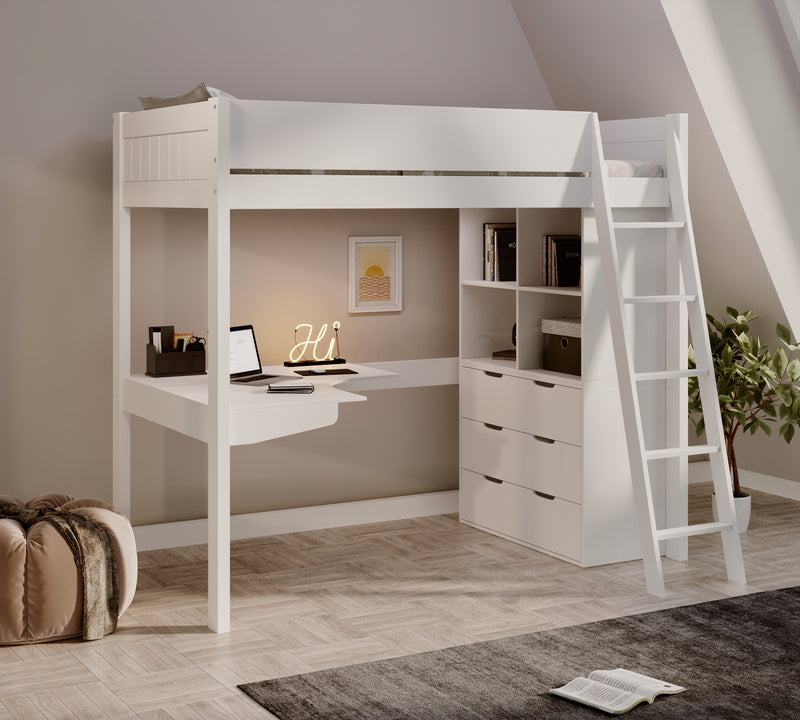
A fitted desk sits under the bed, often with shelves above it, so there's a proper study space without giving up floor space. Some have a desk that slides out or moves, which helps in awkward rooms. The Pure and Cambridge are simple, practical options.
See all our beds with desks, or our pick of the best high sleepers with desks for teens.
3. High sleepers with storage and a wardrobe
Best for: small rooms that need to hold everything
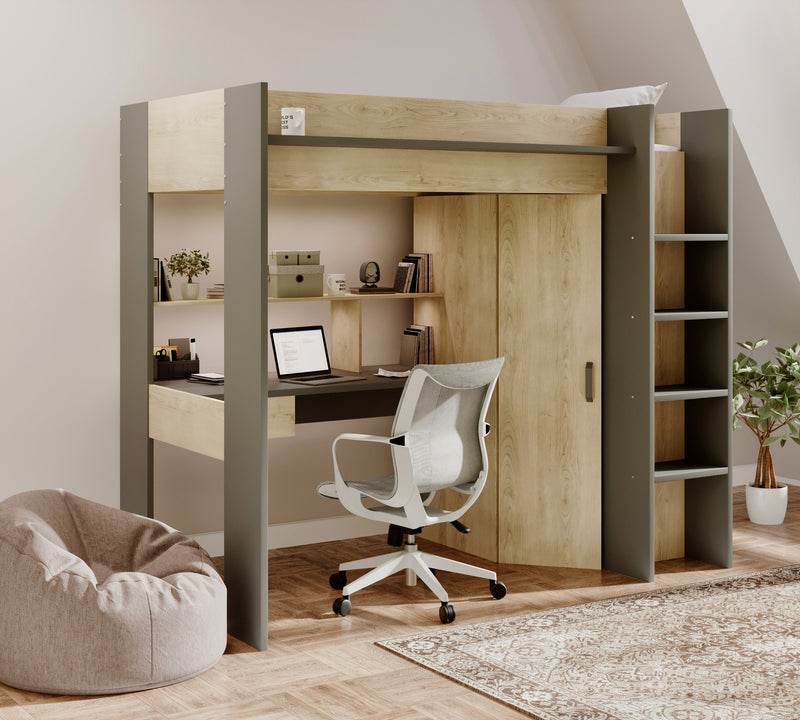
A wardrobe, drawers and shelving built into the frame can replace most of a bedroom's furniture, which is why these are so popular for box rooms. The Kensington pairs a desk with a wardrobe, while the Wilton, Highgate and Berkeley add shelving as well.
Browse our beds with wardrobes.
4. High sleepers with a sofa bed
Best for: sleepovers and a comfy place to relax
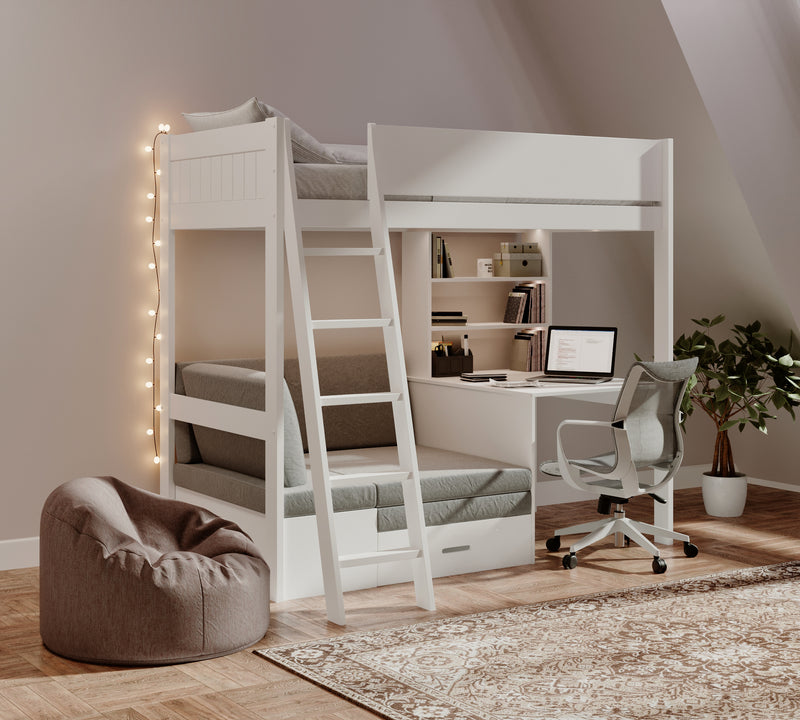
A sofa underneath folds out into a second bed, so friends can stay over, and the rest of the time it's a spot to read or watch films. Most leave room for a desk alongside. Our best-selling Windsor combines a sofa bed with a desk, as do the Oxford and the new Chelsea in cashmere. The Balmoral uses a chair bed instead.
See all our high sleepers with sofa beds.
5. Gaming high sleepers
Best for: screens, consoles and a proper gaming setup
A desk that runs the full width of the bed gives room for a monitor or two, a console and a PC tower, with the bed out of the way above. The Little Folks Edit has a full-length desk in solid hardwood, and the Alderley adds a sofa bed and wardrobe.
Browse our gaming beds.
6. Mini and staircase high sleepers
Best for: younger children and rooms with lower ceilings
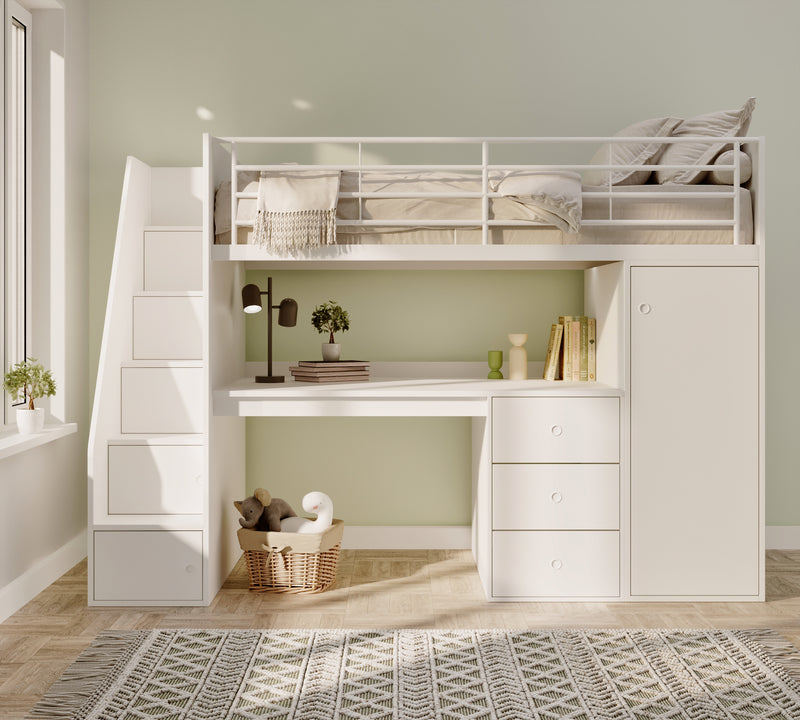
A mini high sleeper sits a little lower, which suits smaller children and rooms with lower or sloping ceilings. The Mini Highsleeper still fits a wardrobe, desk and drawers underneath.
A staircase instead of a ladder is easier and steadier to climb, especially at night, and the steps often double as storage. The Marlow has storage steps, a desk and a wardrobe.
7. L-shaped twin high sleepers
Best for: two children sharing a room
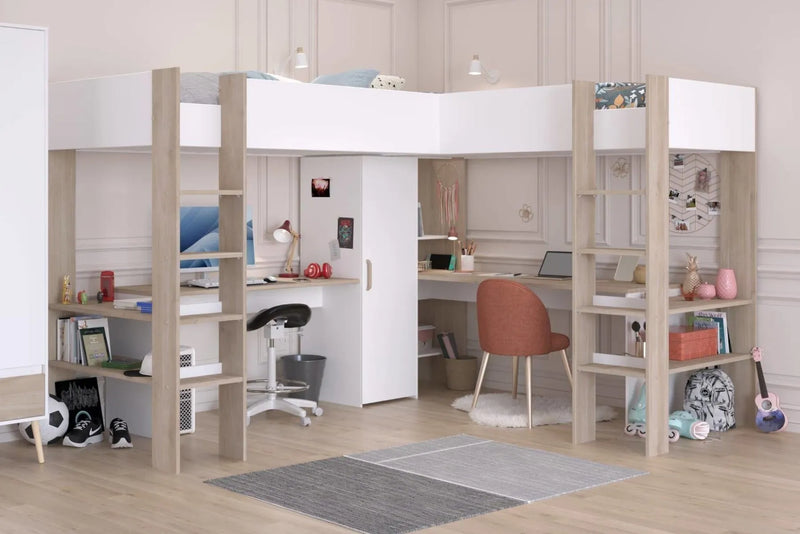
Two raised beds set at right angles, each with its own space underneath, give siblings a bed and desk each without doubling the furniture. The Harrow has two desks and a wardrobe. If they'd rather sleep one above the other, see our bunk beds or the loft bed vs bunk bed guide.
Before you buy: what to check
- Age. High sleepers are for children aged 6 and over. For younger children, a floor-level bed or the bottom bunk is safer.
- Ceiling height. A standard UK ceiling of around 2.4m suits nearly all our high sleepers. If yours is lower or slopes, measure the lowest point above where the bed will go and compare it with the bed's height on its page.
- Safety standard. Look for BS EN 747 on the product page. It's the UK standard covering guard rail height, ladder design, gap sizes and strength.
- Floor space. Allow clear floor at the foot of the ladder or stairs, and room for a sofa bed or desk to pull out. Check which side the ladder goes, as many can go either side.
- Assembly. High sleepers are a big build. Many of ours offer professional assembly, where the delivery team builds the bed in the room you choose.
The right mattress matters more on a high sleeper
The guard rail only works if the mattress isn't too deep, so every high sleeper has a maximum mattress depth, usually 15cm. Some designs also take a longer European single (90 x 200cm) rather than a UK single (90 x 190cm). Each bed page shows the size and depth, and most offer matched mattresses you can add for less than buying them separately. Our MemoryDream 15 is a popular choice, or see all bunk bed and high sleeper mattresses and our mattress depth guide.
Choosing a bed for a child? Our bed finder asks a few quick questions about their age, their room and your budget, then shows the beds that suit, with £20 off a mattress to go with it.
Common questions
What age is a high sleeper suitable for?
From 6 years old. That's the UK safety standard for raised beds. Many children move up to a high sleeper between 7 and 10, often when they start needing a desk for homework.
What's the difference between a high sleeper, a mid sleeper and a loft bed?
A loft bed is another name for a high sleeper. A mid sleeper is lower, with room underneath for drawers or a pull-out desk rather than a full desk or sofa. See our mid sleepers if you'd like something lower.
Do high sleepers come with a mattress?
No, mattresses are sold separately. Where a bed page offers mattresses, they're all within the bed's maximum depth, and you can add one for less than buying it separately.
Will a high sleeper fit in my room?
A standard UK ceiling of around 2.4m suits nearly all our high sleepers. If yours is lower or slopes, compare the lowest point with the bed's height on its page. Allow floor space at the ladder too. If you're unsure, send us your room measurements and we'll tell you honestly what fits.
Which type is best for a small bedroom?
A high sleeper with storage and a wardrobe, or one with a desk and a sofa bed, replaces the most furniture. Our guide to beds for small rooms has more ideas.
Find the right high sleeper
Desks, wardrobes, sofa beds and gaming setups, all in one place.
Shop high sleepersWant the full detail on sizes and safety? Read our complete high sleeper guide.