Bunk Beds With Storage
As a UK kids bed specialist, we’ve spent years helping families find bunk beds with storage that genuinely work for compact British homes. Whether you’re dealing with a box room, a shared sibling bedroom, or simply want to squeeze more from your existing space, these beds combine two sleeping spaces with integrated drawers, shelves, wardrobes or cupboards, all within the footprint of a single bed.
Our storage bunk beds are designed specifically for kids and teens, with UK-standard 3ft single and 4ft small double options that are built to comply with British safety standards. From under bed drawers that swallow seasonal clothes to staircases with hidden step storage, you’ll find models that tackle clutter head-on while keeping the room functional for play and homework.
Customers regularly ask us about different storage configurations, and we’re happy to say the range has never been better. You can choose from beds with storage drawers tucked beneath the bottom bunk, staircase designs where each step doubles as a cubby, built in shelves at the bed ends, and pull-out trundles perfect for sleepovers. These aren’t just beds, they’re complete bedroom solutions that help growing families stay organised without buying extra furniture.
Types of Bunk Beds With Storage We Offer
We stock a curated range of kids bunk beds with built-in storage, all built for UK homes and typical ceiling heights found in everything from Victorian terraces to modern new builds. Each design balances sleeping space with practical storage, so you’re not compromising on either.
Below, we’ll break down the main types available: single over single, triple sleepers, staircase bunks, and high sleeper gaming setups. Each has its strengths depending on your room size, the ages of your children, and what kind of clutter you’re trying to tame.
Single Over Single Bunk Beds With Drawers & Shelves
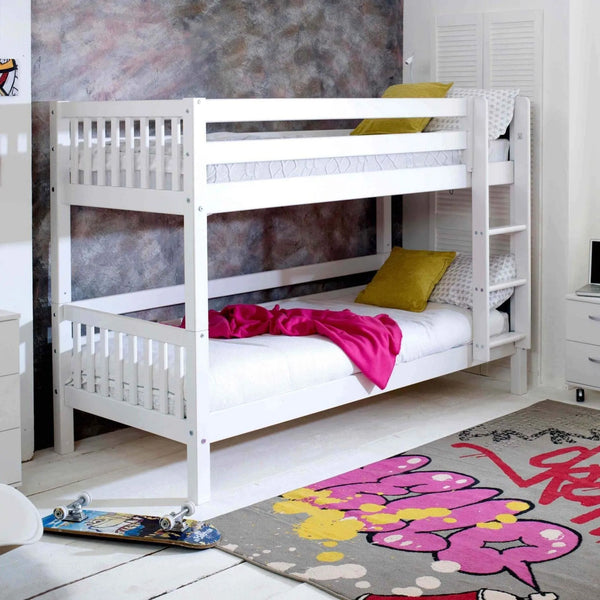
The classic single over single bunk bed remains the most popular choice for UK families. These beds stack two 3ft single sleeping platforms vertically, typically measuring around L198 x W100 x H160 cm. What makes our storage versions different is the integration of two deep pull-out drawers beneath the lower bunk, plus open shelves at the bed end for books and bedtime essentials.
A typical example from our range is a white wooden bunk with two full-width under-bed drawers and a sturdy fixed ladder. Priced from around £329-£599, it suits children aged 4+ on the bottom bunk and 6+ on the top. The drawers provide enough room for pyjamas, spare bedding, and a decent collection of soft toys, items that would otherwise need a separate chest of drawers you simply can’t fit in a small bedroom.
These children’s bunk beds are ideal when siblings share a small room and there’s no wall space for additional furniture. The beds stacked vertically free up extra floor space in the centre of the room, leaving enough area for a play mat or a small desk.
Best for:
- Small box rooms under 8 square metres
- Siblings aged 4–12 sharing a bedroom
- Rental properties where built-in storage isn’t available
Triple Sleeper Bunk Beds With Storage
Triple sleeper bunk beds take the concept further by placing a 4ft small double (or 4ft6 double) on the bottom with a 3ft single on top. This configuration comfortably sleeps two or more beds’ worth of children while still fitting a compact footprint, typically around 173 x 158 x 196 cm overall.
Our grey and white triple sleeper, for example, includes two spacious drawers under the lower bed and a small bookshelf integrated into the headboard. Priced between £449–£649 depending on finish and features, it’s become a favourite for families with older kids who need a larger mattress on the bottom, or parents who want a guest bed option for visiting grandchildren.
Triple bunk bed designs work brilliantly for blended families, grandparents hosting multiple grandchildren at weekends, or any situation where three sleepers might occasionally share a room. The double bunk beds configuration on the lower level also appeals to older kids and teens who’ve outgrown standard singles.
Sleeping capacity and storage at a glance:
- Lower bed: Small double or double (sleeps 1–2)
- Upper bed: Single (sleeps 1)
- Storage: Two under-bed drawers, integrated shelving
- Total sleeping capacity: Up to three children
Staircase Bunk Beds With Cupboards & Step Drawers
Staircase bunks replace the traditional ladder with a wide staircase, and each step hides a drawer or lift-up cubby. This converts what’s usually dead space into useful storage for clothes, Lego sets, board games, or school supplies.
A popular model in our range is a white oak staircase bunk measuring approximately 112.5 x 241 x 137 cm. It features four step drawers plus a slim side cupboard, providing hanging space without needing a full-size wardrobe. Prices typically range from £499-£899 depending on the size and finish.
Beyond the storage benefits, staircase designs offer genuine safety advantages for younger children. The wider treads, enclosed sides, and handrails make climbing to the top bunk significantly easier—and night-time bathroom trips far less nerve-wracking for both kids and parents. If you’ve got a child under 6 who’ll eventually move to the top bunk, starting with a staircase model makes the transition much smoother.
High Sleeper & Gaming Bunks With Desks and Storage
High sleeper and gaming-style bunks raise the bed to near-ceiling height, freeing the entire area beneath for built-in desks, shelving for consoles and books, and cupboards for schoolwork and accessories. It’s essentially a loft bed with serious functionality.
A black metal gaming high sleeper from our range (approximately 145 x 198 cm footprint, height around 180 cm) includes an integrated desk and multiple shelves. Priced around £320–£450, it’s ideal for teens who need a compact sleep–study–gaming zone in one corner of the bedroom.
These designs are particularly effective for older kids approaching GCSE years, where homework demands increase but bedroom space doesn’t. By combining bed, desk, and storage into a single vertical unit, you free up the remaining floor area for seating, a wardrobe, or simply some breathing room.
Perfect for:
- Teens aged 12+
- Gaming setups needing shelf space for consoles and controllers
- Homework stations with desk space for laptops and books
Built-In Storage Options: What You Actually Get
Not all bunk beds with storage are created equal. Some offer a couple of shallow drawers that barely hold a spare duvet, while others include comprehensive systems with drawers, shelves, cupboards, and even pull-out guest beds. Understanding what’s available helps you match the bed to your family’s actual clutter.
The main storage types we stock include under-bed drawers, end shelves and headboard storage, staircase drawers and hidden cupboards, all-in-one wardrobe and desk units, and trundle drawers that double as guest beds. We’ll break each down so you can decide which targets your specific storage problems—whether that’s overflowing toy boxes, clothes that won’t fit in the wardrobe, or books scattered across every surface.
Under-Bed Drawers for Clothes and Bedding
Many of our wooden bunks include one or two full-length drawers on castors beneath the lower bunk. These are typically 95–100 cm wide and 15–20 cm high internally, providing ample space for pyjamas, spare duvet covers, seasonal clothes, and soft toys that would otherwise colonise the floor.
Most storage drawers come finished in matching colours like white, grey, or light oak to maintain a clean look. In rooms where there’s genuinely no space for a separate chest of drawers—common in UK box rooms and narrow bedrooms—under-bed storage becomes essential rather than optional.
Ideal contents:
- Spare bedding and pillows
- Out-of-season clothes (winter jumpers in summer, shorts in winter)
- Soft toys and larger plush items
- Extra blankets for colder nights
End Shelves and Headboard Storage for Books & Toys
Bunks with open shelving built into the bed ends or headboards solve the “where do I put my stuff?” problem that every child has at bedtime. These shelves are perfect for bedtime books, night lights, water bottles, and favourite toys that need to be within arm’s reach.
A white and oak bunk from our range includes three vertical shelves at the side of each bunk level, priced around £329-£379. This keeps surfaces clear and eliminates the need for bedside tables that simply won’t fit in narrow rooms, a common issue in UK terraced houses and new-build bedrooms.
The key is not to overload these shelves. A few neatly arranged books, a small lamp, and one or two personal items create a calm sleep environment. Overstuffing them defeats the purpose and can become a safety issue if items fall during the night.
Staircase Drawers and Hidden Cupboards
Staircase bunks use each step as storage, typically creating four to six deep drawers or lift-up compartments. These are ideal for bulkier items that won’t fit in standard drawers: board games, construction sets, sports equipment, or shoes.
Some models also hide a slim wardrobe or tall cupboard at the side of the stairs, providing hanging space for school uniforms, coats, or dresses. This is particularly valuable in loft conversions or box rooms where sloped ceilings limit where you can place traditional wardrobes.
The depth of stair storage often surprises parents. Each step drawer can hold substantially more than flat under-bed drawers, making staircase designs worth the slightly higher price point if you’re dealing with serious toy accumulation or limited wardrobe space elsewhere in the child’s bedroom.
Wardrobe, Desk and “All-in-One” Storage Units
For families needing maximum functionality from minimum floor area, we stock comprehensive units that incorporate a narrow wardrobe, built-in desk, and multiple shelves under or beside the bunk. These typically use a 90 x 190 cm mattress (standard UK single) and pack everything into a surprisingly compact footprint.
Bunks with wardrobe and desk combos, priced around £700, suits older kids in smaller new-build bedrooms where separate furniture simply won’t fit. These all-in-one designs can replace three separate pieces of furniture while leaving living space for other activities.
Replaces:
- Freestanding wardrobe
- Separate desk or homework station
- Bookcase or shelving unit
Trundle Drawers and Pull-Out Guest Beds
There’s an important difference between a deep storage drawer and a pull-out trundle that can take a 3ft mattress for occasional guests. Storage trundles look like drawers but are designed to accept a slim mattress (UK single 90 x 190 cm, typically 15-18 cm deep), transforming a two-sleeper bunk into accommodation for three when needed.
Trundle beds are ideal for sleepovers, cousins staying during school holidays, or shared bedrooms where a third child occasionally needs to sleep. When not in use as a guest bed, the trundle can hold spare bedding or bulky items, so it never sits empty.
Always check the maximum mattress depth recommended by the manufacturer, typically 15 cm for trundles that need to slide fully under the bed frame. Using a thicker mattress may prevent the trundle from closing properly or put excess pressure on the runners.
Why Choose a Bunk Bed With Storage for UK Family Homes?
UK bedrooms - particularly children’s rooms - are often compact by international standards. A typical child’s bedroom in a UK semi measures around 8-10 square metres, and that has to accommodate sleep, play, storage, and increasingly, homework. Combining sleeping arrangements and storage in a single footprint isn’t just practical; it’s often the only way to make a room genuinely functional.
The benefits extend beyond simple space saving. Beds with storage reduce visible clutter (fewer toys on the floor means fewer things to trip over), delay the expensive need to move to a bigger house, and help children learn organisational habits from an early age. For growing families watching both space and budget, these beds deliver serious value.
Maximising Floor Space in Small and Box Rooms
A bunk bed with drawers or shelves can free up 1-2 square metres of floor space compared to having two separate single beds plus a chest of drawers. In a small bedroom, that’s the difference between cramped and comfortable.
Consider a typical 2.1 m x 3 m box room in a UK semi. With a standard single bed plus a small wardrobe and chest of drawers, you’re left with perhaps 1.5 square metres of usable floor area-barely enough to walk around, let alone play. Replace those pieces with a storage bunk bed, and suddenly you’ve reclaimed the centre of the room.
By stacking beds and building storage into the frame, children gain genuine extra space for a play mat, a reading corner, or simply room to move. The floor area remains functional rather than becoming an obstacle course of furniture edges and drawer handles.
Keeping Kids’ Rooms Tidier (With Less Effort)
Children are more likely to tidy up when storage is low, accessible, and logically organised. Built in drawers and cubbies at child height help them develop independence and make nightly tidy-ups faster-both for them and for the parent supervising.
The key is making it obvious where things belong. When a drawer is labelled “Lego” and another is labelled “soft toys,” even young children can put things away correctly. Over time, this builds habits that last well beyond childhood.
Practical tidy-up tips:
- Label drawers with icons or colours for younger children who can’t read yet
- Assign one drawer per toy category to avoid everything getting mixed together
- Keep frequently used items in the most accessible drawers
- Do a quick 5-minute tidy before bed each night rather than a big weekend clear-out
Future-Proofing Rooms as Children Grow
The best bunk beds grow with your family. Many of our models feature detachable frames that can be separated into two single beds when siblings no longer want to share or teenagers need more privacy. This means you buy once and keep the bed for 8–10 years, adjusting the configuration as needs change.
Choosing a sturdy solid wood frame with neutral finishes-white, grey, or oak-ensures the bed remains suitable from early primary years through to GCSEs. Bright character themes might appeal to a five-year-old, but they’ll feel embarrassing by age ten. Classic choice finishes have staying power.
Look for:
- Detachable frames that convert to two separate singles
- Standard UK mattress sizes (90 x 190 cm single, 120 x 190 cm small double)
- Neutral colours that work with changing room décor
- Durable wood construction that withstands years of use
Safety Guidelines for Bunk Beds With Storage
Safety is our top priority as a specialist UK kids bed retailer. All our children’s bunk beds are designed to meet relevant British and European standards, including BS EN 747 where applicable for structural integrity and guardrail requirements. But buying a safe bed is only half the equation-using it safely matters just as much.
Storage features like drawers and steps must be designed so they don’t become climbing hazards or compromise guardrail height. Well-designed storage bunks account for this, but parents should understand what to look for and what rules to establish for their children.
Key safety requirements we look for:
- Guardrails at least 180mm high on top bunks
- Upper bunks capable of supporting at least 100kg
- Gaps between slats and guardrails no wider than 75mm
- Secure ladders or staircases with no loose fittings
Age Recommendations and Safe Use
The guidance is straightforward: bottom bunks are suitable for children aged 4+, while top bunks should only be used by children aged 6 and over. This isn’t arbitrary - it reflects the physical coordination and judgement needed to climb safely and sleep at height without rolling out.
Even if a younger child seems confident climbing, they should always sleep on the lower bunk until they reach the recommended age. Night-time disorientation and the unfamiliar feeling of height can lead to falls, regardless of how capable a child appears during the day.
House rules for safe bunk bed use:
- Only one child on the ladder or staircase at a time
- No jumping on any bunk, especially the top bunk
- No playing on the ladder - it’s for climbing only
- Use the guardrail side of the top bunk for sleep, not against the wall
Mattress Heights, Guardrails and Ladders
For safety, top bunk mattresses should usually be no higher than 15-16 cm to maintain adequate guardrail height above the mattress surface. Using a thicker mattress reduces the effective guardrail height and increases fall risk - always check each product for its exact mattress depth limit.
Our designs include full-length guardrails on the top bunk and fixed ladders or staircases with flat steps for more secure footing. Staircases are particularly recommended for younger children or those who lack confidence climbing.
Ceiling height matters too. Leave at least 60 cm between the top of the mattress and the ceiling so older children and teens can sit up safely without bumping their heads. Most UK homes have adequate ceiling height, but check before purchasing, especially in loft conversions or rooms with sloped ceilings.
Safety checks after assembly:
- Test all guardrails for stability - they shouldn’t wobble
- Confirm the ladder or staircase is securely fixed
- Check that slats are properly seated and evenly spaced
- Verify mattress sits below the top of guardrails
Storage Safety: Drawers, Doors and Corners
Soft-close drawers or drawer stoppers prevent children pulling drawers all the way out and climbing in or trapping fingers. Most of our beds include these features, but it’s worth checking the product specification before purchasing.
Our bunk beds are designed with rounded edges where possible, and hardware that sits flush to minimise bumps and scrapes. Children move quickly and unpredictably, so these details genuinely matter for everyday safety.
Storage safety tips:
- Keep heavy items (books, board games) in lower drawers
- Store lighter items on higher shelves
- Ensure drawers close fully and don’t protrude into walking paths
- Check drawer runners periodically for smooth operation
How to Choose the Right Storage Bunk Bed
Choosing the right storage bunk bed comes down to three factors: your room dimensions, how many children need to sleep, and what kind of storage problems you’re trying to solve. Get these right, and the bed becomes the perfect bed for your family. Get them wrong, and you’ll have an expensive piece of furniture that doesn’t quite fit or function properly.
This section provides a practical buying guide tailored to UK families, covering measuring, material choices, and realistic budgeting.
Measure Your Room and Plan the Layout
Before browsing products, measure your room properly. You need length, width, and ceiling height, plus the position of doors, radiators, windows, and any built-in features that limit where furniture can go.
Common bunk bed lengths run around 196-200 cm, with widths from 100 cm for single-over-single models up to 140 cm for triple sleepers. Remember to leave space for drawers to pull out fully - usually 40-60 cm clearance in front of the bed. A drawer you can’t open properly is storage you can’t use.
Sketch a quick floor plan, even a rough one. Mark where the ladder or staircase will sit so it doesn’t block doors, wardrobes, or access to windows. Staircase bunks, in particular, have a larger footprint and need careful positioning.
Measurements to take:
- Room length and width at floor level
- Ceiling height (especially in loft conversions)
- Clearance for drawer extension (40-60 cm)
- Position of doors, radiators, and windows
- Which side the ladder or staircase will work best
Match Storage Type to Your Child’s Needs
Younger children typically generate more toy clutter, so deep drawers and cubby holes work best. Older kids and teens need shelving and desk space for books, tech, and school supplies. Matching storage to age and lifestyle prevents buying features you won’t use.
Staircase storage models suit families with lots of bulky items-Lego collections, board games, sports equipment. High sleepers with desks are better for school-age children with homework and devices to manage. Think about what currently clutters the floor and pick storage that targets those specific items.
Common clutter types and best storage solutions:
- Soft toys and teddies → Under-bed spacious drawers
- Books and reading material → End shelves and headboard storage
- Lego, board games, bulky toys → Staircase step drawers
- Clothes and bedding → Under-bed drawers and wardrobe units
- School supplies and tech → Desk units with shelving
Choosing Between Wood, Metal and Mixed Materials
Solid pine and engineered wood frames offer warmth and a classic look that suits most children’s rooms. They also allow for stronger integrated drawers and cupboards, since wood joinery handles drawer weight better than metal frames.
Metal frames have their place-they’re typically slimmer, often cheaper, and work well for older kids or gaming setups where a more industrial aesthetic fits the room. However, they’re less suited to heavy integrated storage.
Most of our storage bunks are wooden or mixed wood/metal construction, prioritising durability. We recommend neutral finishes (white, grey, oak) for longevity, with bolder colour accents coming from bedding and accessories rather than the bed frame itself.
Material comparison:
- Solid wood (pine/oak): Warm appearance, strong drawer integration, premium materials, higher price point
- Engineered wood (MDF/particle board): Good value, consistent finish, adequate for lighter use
- Metal: Slim profile, often cheaper, best for teens, less suited to heavy storage
Budgeting: What to Expect to Spend
Simple storage bunks with under-bed drawers start from around £280-£350. Staircase models and triple sleepers with multiple storage features typically run £450-£700 or more, depending on size, materials, and finish quality.
While storage bunk beds cost more than basic bed frames, they can replace separate wardrobes, chests of drawers, and desks - often saving money overall when you factor in the furniture you don’t need to buy. A £600 bunk with wardrobe and desk is cheaper than a £300 basic bunk plus a £200 wardrobe plus a £150 desk.
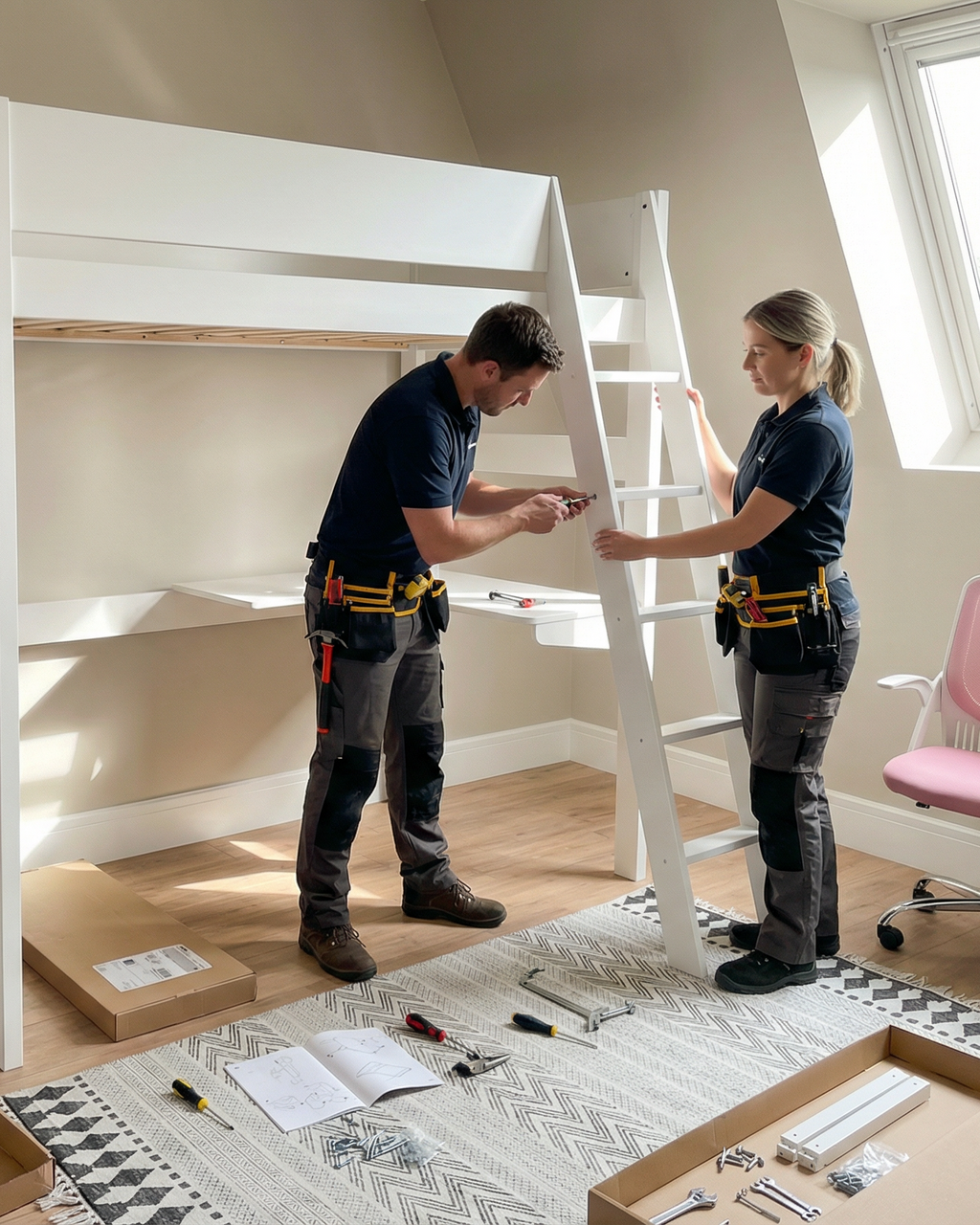
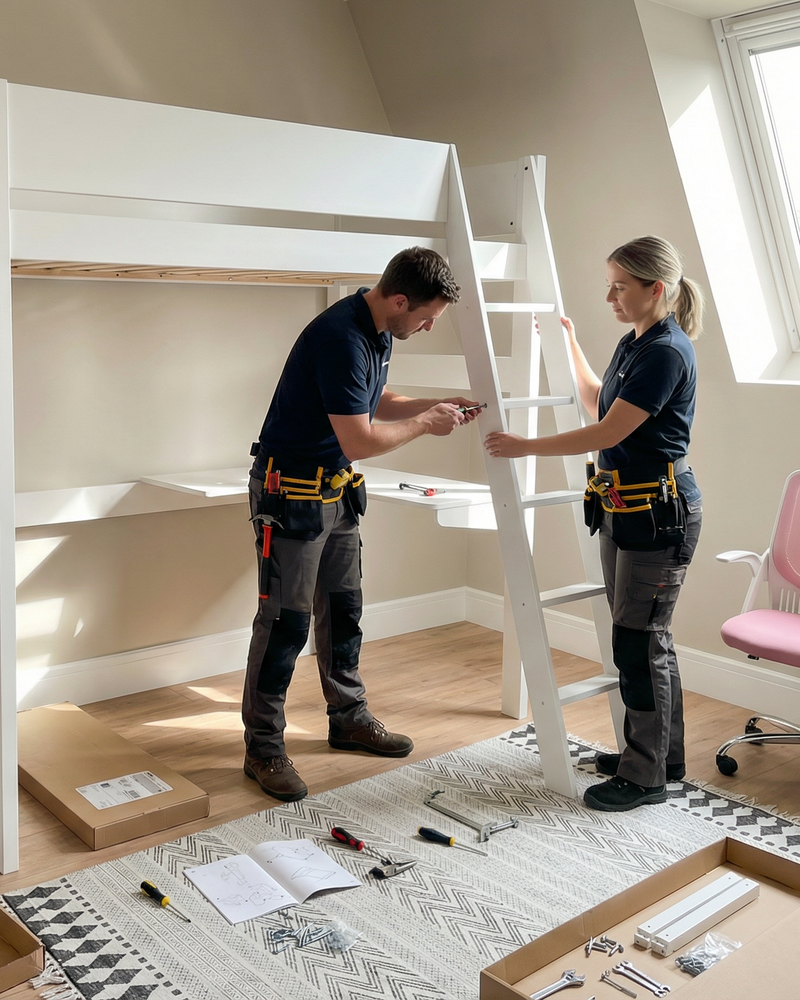
Factor in mattresses (usually sold separately) and optional assembly if you’d prefer not to build the bed yourself. Assembly typically takes 2-4 hours for two adults.
Budget tiers:
- £280–£350: Single-over-single with 1–2 under-bed drawers, basic shelving
- £400–£550: Staircase bunks with step storage, triple sleepers with drawers
- £550–£700+: All-in-one units with wardrobes, desks, and comprehensive storage options
Caring for Your Bunk Bed With Storage
A well-maintained bunk bed provides safe, comfortable sleep for years. Regular checks and basic care keep the structure sound, the finish looking good, and the storage features working smoothly. None of this is difficult, but it does require some attention.
Routine Maintenance and Safety Checks
Tighten bolts and screws every 3–6 months, focusing on high-traffic parts like ladders, staircases, and guardrails. Children climbing daily will gradually loosen fixings, and catching this early prevents wobbles or safety issues.
Visually check guardrails, slats, and drawer runners regularly for any signs of movement, damage, or unusual wear. Re-check the mattress height on the top bunk whenever mattresses are replaced to ensure guardrail safety is maintained-a new, thicker mattress might reduce effective guardrail height below safe limits.
Maintenance schedule:
- Monthly: Visual check of guardrails and ladder
- Every 3 months: Tighten all accessible bolts and screws
- Every 6 months: Full inspection including drawer runners and slat positioning
- After mattress replacement: Confirm mattress depth is within safe limits
Cleaning and Protecting the Finish
Most painted or lacquered wooden bunks can be wiped down with a soft damp cloth and mild soap. Avoid abrasive cleaners, which can damage the finish and make future cleaning harder.
Use felt pads or fabric baskets inside drawers to protect bases from sharp toy corners and metal objects. Scuffs on white or grey paint can often be touched up with colour-matched paint pens or small tester pots from DIY shops, a quick fix that keeps the bed looking fresh.
Cleaning dos and don’ts:
- ✓ Use soft damp cloths
- ✓ Apply mild soap for stubborn marks
- ✓ Dry surfaces after cleaning
- ✗ Avoid abrasive cleaners or scouring pads
- ✗ Don’t soak wood with excessive water
Keeping Storage Organised Over Time
Even the best storage systems become chaotic without occasional maintenance. Encourage parents to declutter kids’ drawers and shelves every 6-12 months, donating or recycling toys and clothes that are no longer used.
Simple organisers like fabric cubes in drawers or labels on shelves keep everything easy to find. Involving children in reorganising their storage makes them more invested in keeping it tidy, and teaches valuable organisational skills they’ll use throughout life.
Quick organisation tips:
- Do a seasonal declutter (summer and winter work well)
- Use dividers or boxes to separate categories within drawers
- Rotate toys—store some and swap them out every few months
- Let children choose where their favourite toys belong
Shop Bunk Beds With Storage From a UK Kids Bed Specialist
Finding the perfect bed for a child’s bedroom shouldn’t mean compromising on storage or space. As a UK kids bed specialist, we’ve carefully selected our range of bunk beds with storage to meet the real needs of British families: space efficient designs that fit typical UK room sizes, safety-focused construction that lets parents rest easy, and smart solution storage that keeps bedrooms functional and clutter-free.
Whether you need a simple single bunk with drawers for a box room, a triple sleeper for a growing family, or a high sleeper with desk for a teen tackling homework, we have various styles to match your space and budget. Every bed uses UK-sized mattresses, complies with relevant safety standards, and comes with clear assembly guidance.
Browse our current range of bunk beds with storage and filter by size (single, small double, triple), colour, and budget. If you need help with sizing, safety questions, or choosing between storage options, our team is happy to advise, we’ve helped hundreds of families find the right bed, and we’d be glad to help yours.
Why buy from us?
- UK kids bed specialist with genuine expertise in children’s sleep furniture
- Products meeting British standards
- Family-focused designs built for real UK homes
- Honest advice to help you choose the right bed first time




 Hemel Hempstead, UK
 support@millieandjones.co.uk
 020 8264 0042