





"Double bunk bed" means two different things. Some retailers use it for any bunk bed, because it sleeps two. Others mean a bunk with a double or small double on the bottom and a single on top, which sleeps three. They're very different beds, so it's worth knowing which one you need before you start. This guide covers both, and which suits a shared room.
On this page
The two meanings
| What people mean | What it is | Mattresses needed |
|---|---|---|
| Standard bunk | Two singles, one above the other | Two singles (90 x 190cm) |
| Double bunk, or triple sleeper | A double or small double below, a single above | One double (135 x 190cm) or small double (120 x 190cm), plus one single |
The second type is often sold as a triple sleeper, because the bigger bottom bunk comfortably sleeps two children. When you're comparing beds, look at the mattress sizes listed rather than the name. That tells you exactly what you're buying.
Who a double bunk suits
Three children in one room
Two on the bottom and one on top, in little more floor space than a single bed.
A big age gap
A parent can lie down on the bottom bunk at bedtime, which makes stories far easier than perching on the floor.
Sleepovers and visiting family
A double bottom bunk takes two children, or one adult, which a standard single doesn't.
A growing teenager
A double below gives far more room than a 90cm single, in a room that still fits two beds.
Our double bunks
All three of our double bunks have a full UK double on the bottom and a single on top.

Sleeps up to four
Burford Family Bunk
A full double below, a single above, and an optional pull-out trundle underneath for a third child or sleepovers. In solid pine with a warm cashmere finish, each bunk has its own full-length shelf with cubbies, so everyone has somewhere for a book and a lamp.
See the Burford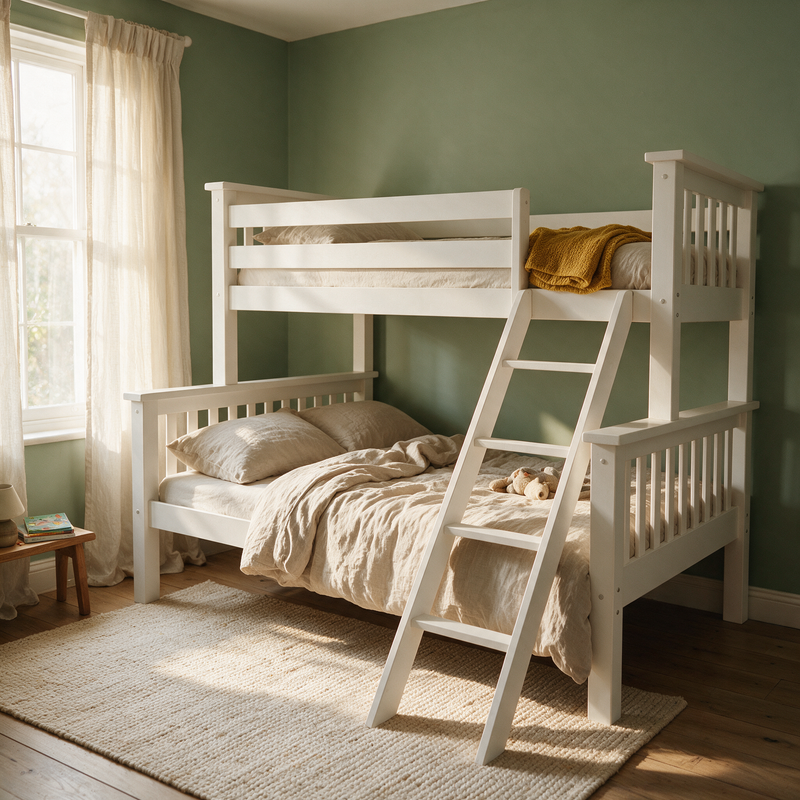
Splits into two beds
Atlas Triple Bunk
Solid pine with chunky 75mm posts, finished in white. When the bunk years are over, it separates into two freestanding beds, a single and a double, so it carries on being useful. At 159cm tall, it also suits rooms with lower ceilings.
See the Atlas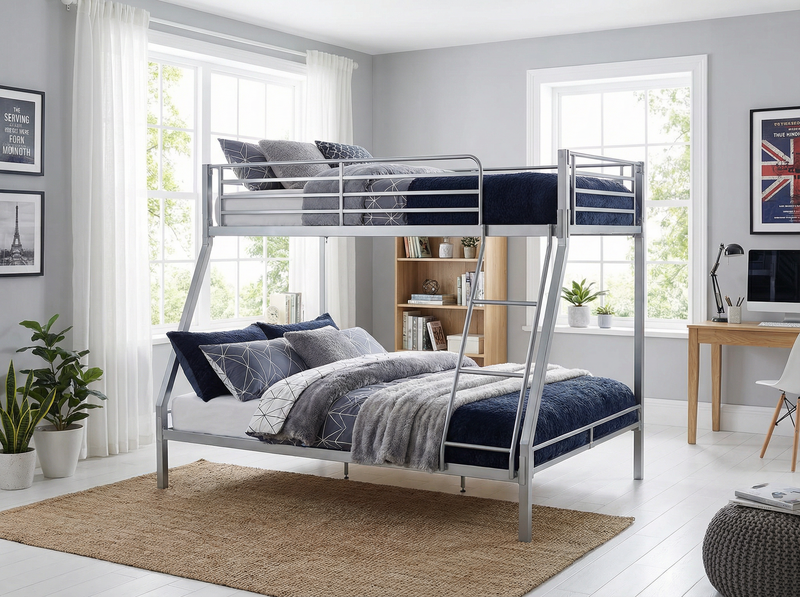
Sturdy metal frame
Skyline Triple Bunk
A robust metal double-over-single bunk, designed to take 150kg on each bunk, so an adult can use the bottom one. A clean, simple look that suits a shared room or a guest room.
See the SkylineNeed three separate beds instead? The Vertex stacks three singles, which needs a tall ceiling. See all triple bunk beds.
Just two children? A standard bunk with two singles is the right answer for most shared rooms, with far more choice. The Belgravia builds in a wardrobe and drawers, and the Ashby adds a trundle and splits into two singles. See all bunk beds or our guide to bunk beds with storage.
Mattresses: the part that catches people out
A double bunk needs two different mattress sizes, which surprises people at checkout:
- Bottom bunk: a double (135 x 190cm) on all three of ours. Some other double bunks take a small double (120 x 190cm), so check the product page.
- Top bunk: a standard single (90 x 190cm), no deeper than the bed's stated maximum, usually 15cm, so the guard rail stays high enough above it.
- Trundle, if fitted: a slim mattress, usually around 10cm, so it slides under the frame.
Our MemoryDream 15 comes in both single and double sizes, and the TrundleEase 10 fits trundles. There's more in our bunk bed mattress guide.
Room and safety
- Ceiling height. The child on the top bunk needs to sit up comfortably. Measure the ceiling directly above where the bed will stand, not at the highest point of the room.
- Width. With a double on the bottom, the bed is about 45cm wider than a standard bunk. Check it against the wall, and leave room for the ladder.
- The top bunk is for 6 and over. That's the guidance in BS EN 747, and it applies to every bunk bed whatever the size of the bottom bunk. The bottom bunk has no such restriction, which is why a double bunk works well for siblings of different ages.
- Weight limits. Where a weight limit is given, it's on the product page, and the bottom bunk usually takes more than the top. Check it if an adult will use the bed.
There's more on our safety advice page.
Making a shared room work
- Give each child their own light. A reading light each saves more arguments than any amount of storage. Run the cables along the wall, not over the guard rails.
- Keep storage in the bed frame. Drawers under the bottom bunk or shelves at the bed end mean one piece of furniture instead of three.
- Let them choose one thing each. Their bedding, a poster, the colour of something. A room they've had a say in gets looked after.
- Use different togs on each bunk. Heat rises, so the top bunk is usually a degree or two warmer. See our guide to room temperature and children's sleep.
Common questions
What is a double bunk bed?
It depends who's selling it. Some use it for any bunk bed, because it sleeps two. Others mean a bunk with a double or small double on the bottom and a single on top. Check the mattress sizes listed rather than the name.
What size is the bottom bunk on a double bunk bed?
Either a double (135 x 190cm) or a small double (120 x 190cm), depending on the bed. All three of our double bunks take a full double.
Can an adult sleep on the bottom bunk?
On most double bunks, yes. Check the weight limit on the product page where it's given. The Skyline, for example, is designed to take 150kg on each bunk.
How many children can sleep in a double bunk bed?
Three: two on the double bottom bunk and one on top. Four with a trundle, like the Burford family bunk.
What's the difference between a double bunk and a triple sleeper?
Usually nothing. A triple sleeper is a double or small double bottom bunk with a single on top, and the terms are used interchangeably. Some triple bunks stack three singles instead, which needs a tall ceiling.
What mattresses do I need?
Two sizes: a double or small double for the bottom, matching the bed, and a single for the top. The top one must be within the bed's maximum depth, usually 15cm.
Is a double bunk bed bigger than a normal bunk bed?
Wider, by about 45cm with a double on the bottom, but a similar length and height. Measure your wall before ordering.
Room for everyone
Double bunks and triple sleepers for shared rooms, sleepovers and growing families.
Shop triple sleepersBuying a bunk bed for the first time? Read our bunk bed buying guide.


