





Most trend articles are guesswork. This one is built from what we've actually sold as a UK children's bed specialist, using every order from July to September 2026. So if you're looking for the best kids' beds of 2026, this is what families are really buying, and why.
The short version: beds that sleep more than one child, in neutral finishes, with storage and desks built in, bought to last into the teenage years. Most of it comes back to the same thing: UK bedrooms are small, and one bed has to do the work of several pieces of furniture.
The six trends
1. Beds that sleep more than one child
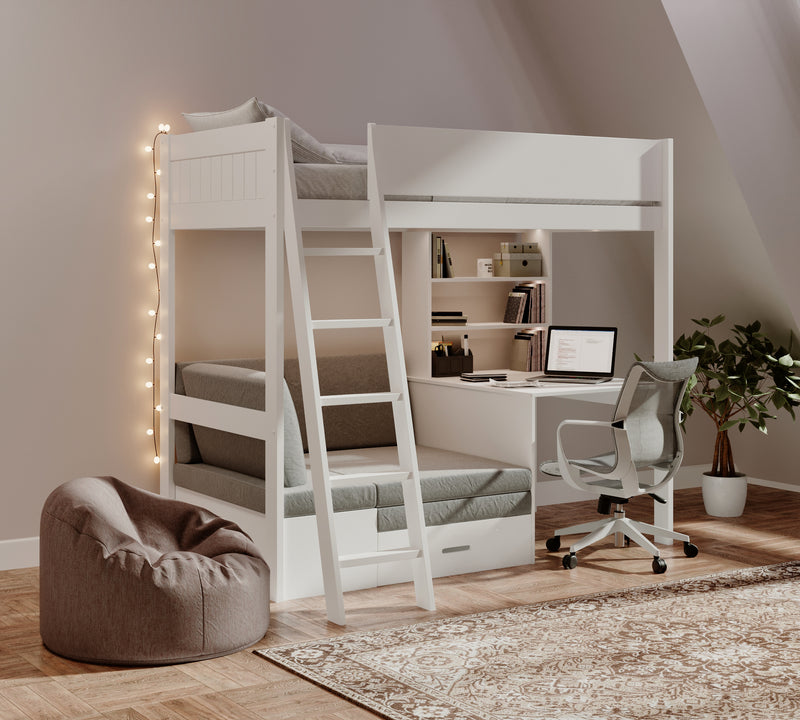
On our bunk beds with an optional trundle, 84% of buyers take the trundle. High sleepers with a sofa bed or chair bed underneath outsell those without by more than two to one.
The clearest pattern in our sales. Not just bunk beds, but any bed with a second sleeping space built in: trundles, sofa beds and pull-outs. Homes are smaller, so a permanent guest bed isn't an option for most families, and a bed that handles a friend staying over has become a requirement rather than a nice-to-have.
Beds we'd suggest: the Windsor high sleeper, our best-selling bed this year; the Burford and Pippa bunks with trundles; and the Brancaster guest bed. See all beds with a trundle.
2. Neutral finishes, not primary colours
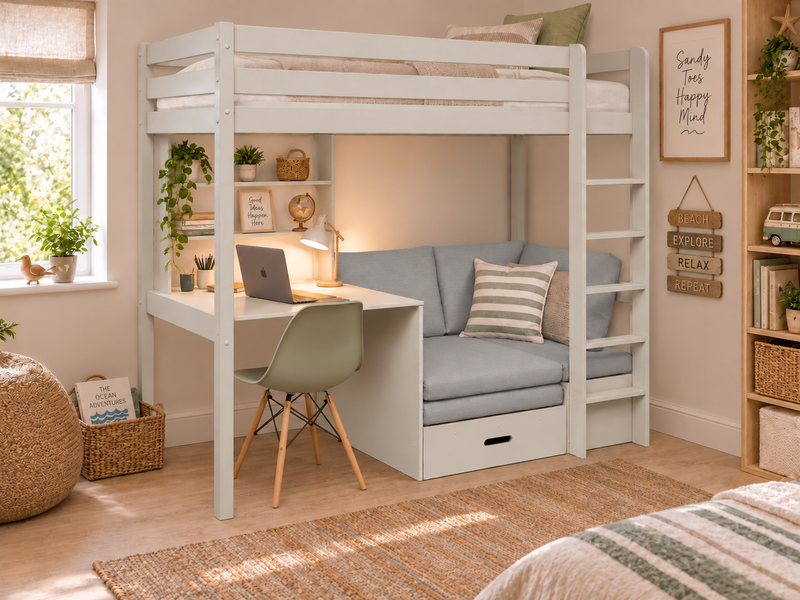
More than half the beds we sold were white, with cashmere and grey next at around one in seven each. Blue and pink together made up about one bed in twenty.
The bright red and blue children's furniture of ten years ago has almost gone. The reason is practical: a neutral bed still looks right when the child is fourteen, so it doesn't get replaced for being too young. The personality goes into bedding, wall art and lighting, which cost a fraction to change.
Beds we'd suggest: the Nyla low bunk and Chelsea high sleeper in cashmere, and the Belgravia bunk in white and oak.
3. One piece of furniture instead of three
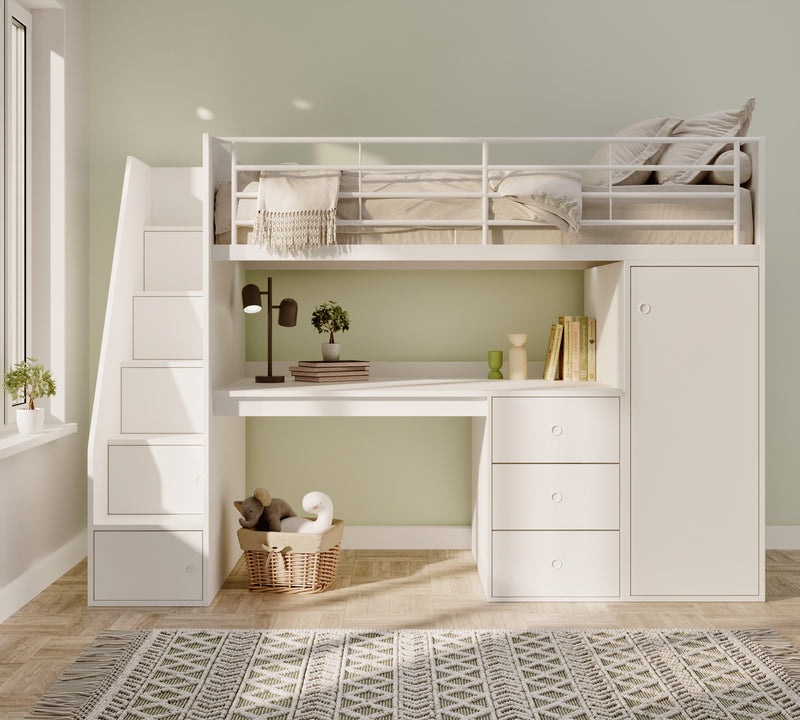
Storage built into the bed rather than bought separately: wardrobes under high sleepers, drawers in staircase steps, drawers under the bed. This is a British problem more than a design trend. Under the national space standard, a single bedroom in a new home can be as small as 7.5 square metres, which doesn't fit a bed, a wardrobe and a chest of drawers with any floor left over. A bed that replaces two other pieces of furniture is often the only way that room works.
Beds we'd suggest: the Arlo, Marlow and Berkeley high sleepers, or the Enzo storage bed for a younger child. See all beds with storage.
4. The desk moved into the bedroom
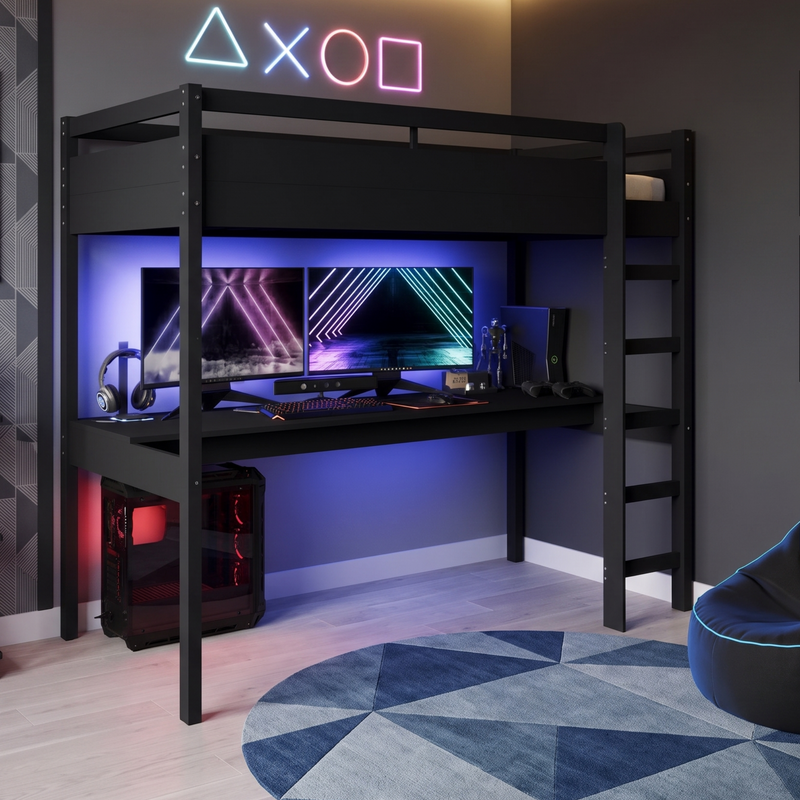
Homework used to happen at the kitchen table. For a secondary-age child it now happens in the bedroom, and the bed has to make room for it. What's changed is desk depth: a laptop needs around 50cm, a monitor and keyboard 70cm or more, and a gaming setup more again. Many built-in desks weren't designed for what now goes on them, so check the desk size rather than assuming. Our guide to high sleeper desk sizes explains what fits.
Beds we'd suggest: the Jax with its full-width desk, the Oxford with a desk and sofa bed, and the Eton mid sleeper, which sits lower. See all beds with desks and gaming beds.
5. Beds bought to last a decade
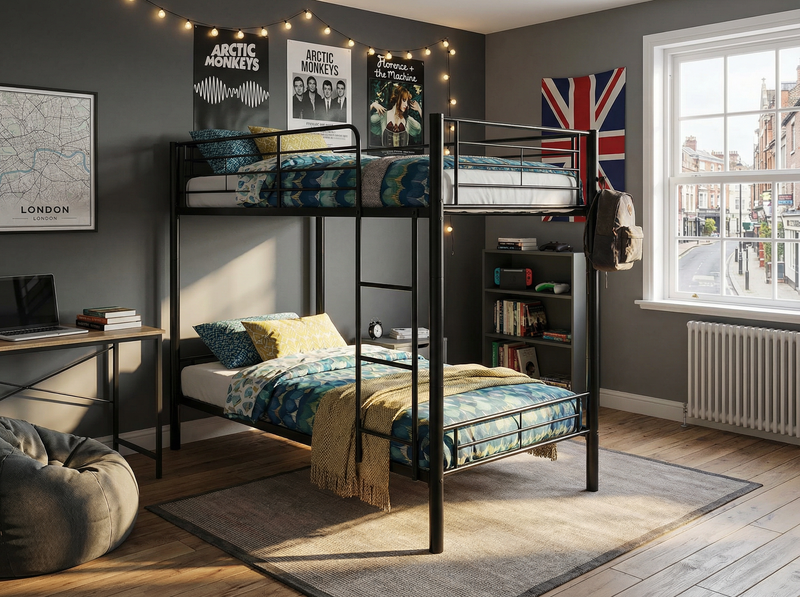
Detachable bunks that split into two single beds, storage beds that work from the early years to leaving home, and continental sizes at 200cm for children who'll be tall. Buying once and buying properly has replaced buying cheaply and buying twice, and given what furniture costs and how little of it can be sold on, that's a rational shift. The features worth paying for are the ones that extend a bed's life: does it detach, does it take a trundle, and will the finish still look right in five years?
Beds we'd suggest: the Ashby, Atlas and Alfie detachable bunks. See all detachable bunk beds.
6. Safety questions, asked earlier
The change we've noticed most in customer enquiries. Parents are asking about BS EN 747 and maximum mattress depth before they buy, not after, and more of them now know a bunk bed needs a slimmer mattress than a normal bed. It's a good development. The rules that matter most on any raised bed:
- The top bunk, mid sleeper or high sleeper is for children aged 6 and over, in line with BS EN 747, however low the frame.
- The maximum mattress depth is usually 15 or 16cm, because guard rails sit a set height above the mattress. Most high-street mattresses are 20cm or deeper.
- Fixings need re-tightening every few months, and after moving the bed.
For the mattress itself, look for BS 7177, the UK fire-safety standard, shown on a permanent label. Our bunk bed mattresses are made at 15cm, and there's more on our safety advice page and in our bunk bed mattress guide.
What hasn't changed
Worth saying, because trend pieces tend to overstate the pace of change.
- Themed beds are still a niche. Children tend to outgrow them sooner. Nothing wrong with that as a deliberate choice, but it's rarely a saving. See our themed beds if that's what you're after.
- White still leads. The neutral trend is a broadening of the palette rather than a replacement.
- The standard single is still the default. At 90 x 190cm it remains what most children sleep on. Continental singles and small doubles are growing, but from a small base.
How to choose, whatever the trends
Three questions matter more than any trend:
- How many children need to sleep in this room, now and in three years?
- What does the bed need to replace? A wardrobe, a desk, a chest of drawers, or nothing.
- Will it still work when they're a teenager?
Then check the room: the headroom above where the bed will stand, space for drawers to open, and where the ladder will go. That usually narrows it to two or three beds. Our kids' bed buying guide walks through it by situation, or message us with your room measurements and we'll tell you what fits. For the mattress, see our kids' mattress size guide.
Common questions
What are the best kids' beds in 2026?
From our own sales, the most popular are beds that sleep more than one child, in neutral finishes, with storage built in. High sleepers with a sofa bed or desk underneath, and bunk beds with a pull-out trundle, are the two set-ups we sell most.
What colour bed should I buy for a child's room?
Neutral, if you'd rather not replace it. White, cashmere, soft grey and oak all still look right when the child is a teenager. Put the personality into bedding and wall art instead.
Are gaming beds worth it?
If the child games, yes, but check the desk depth. A monitor needs considerably more room than a laptop, and some gaming beds don't provide it.
What's the best bed for a small bedroom?
A high sleeper, if the ceiling allows it and the child is 6 or over, as the whole floor underneath comes back. For a younger child, a single bed with drawers underneath or a low cabin bed.
Should I buy a themed or novelty bed?
Only as a deliberate shorter-term choice. Children tend to outgrow them sooner, where a well-made neutral bed with storage can last a decade.
What mattress does a kids' bed need?
Usually a standard UK single, 90 x 190cm, medium to medium-firm, and no deeper than 15 or 16cm on any raised bed.
See what families are choosing
High sleepers, bunk beds and storage beds built for small UK bedrooms.
Shop kids' beds


