If you're trying to squeeze more functionality out of a small bedroom, a high sleeper bed could be exactly what you need. These raised sleeping platforms free up valuable floor space beneath, creating room for desks, storage, or a cosy chill-out zone without sacrificing comfort. As kids' bed experts, we've helped thousands of UK families transform cramped bedrooms into practical, organised spaces that work harder for growing children.
What Are High Sleeper Beds?
A high sleeper bed is a raised bed frame with the sleeping area elevated high above the ground, usually with the mattress platform around 150 to 180 centimetres above floor level, leaving useful open space underneath for a desk, storage or seating. In the UK, high sleeper beds are also known as loft beds, so if you're comparing high sleeper loft beds, you're looking at the same basic bed style.
The main difference between a high sleeper and a bunk bed is simple: bunk beds stack two sleeping spaces on top of each other, while high sleepers have one bed on top with a flexible area below. For parents planning a child's bedroom or a teenager's room, especially in compact or shared UK homes, that space underneath is where high sleeper beds create more floor space, turning limited vertical room into a study area, storage zone or seating without increasing the bed's footprint.
We recommend high sleepers especially for compact rooms, shared bedrooms and UK new-build homes where floor space is tight. In a small bedroom, where children's rooms often measure around 8 to 12 square metres, a high sleeper can be the ultimate space-saving solution, making the room work harder while still meeting the safety standards parents need. Below, you'll find what high sleeper beds are, who they're suitable for, the key safety features and UK standards to look for, size and age guidance for children from around 6 to 16, layout options including desks and sofa beds, materials and colours, mattress advice, delivery and assembly points, and how to decide whether one is the right choice for your child, a teenager who needs a larger bed, or even a guest room.
Are High Sleeper Beds Safe for Children?
Safety comes first with any raised sleeping area, and our high sleeper beds are designed with children's wellbeing at the centre, with the sleeping area raised well above floor level. High sleeper beds must comply with UK safety standards, including BS EN 747, which covers bunk and high beds with specific requirements for guardrails, structural stability, and entrapment prevention.
High sleepers are suitable for children aged 6 and over. This age guideline exists because younger children may not have the coordination or awareness needed to safely use secure ladders and sleep at height. For younger children, we always recommend a mid sleeper or cabin bed instead, which offer some of the same space-saving benefits at a safer height.
Key safety features included across our range:
- Full-length guardrails on all exposed sides, typically at least 160mm above mattress level
- Fixed ladders with deep treads and non-slip steps angled for comfortable climbing
- Sturdy fixings and cross-bracing tested to support dynamic loads
- Safe gap spacing between slats to prevent entrapment
We recommend high sleepers especially for compact rooms because they help maximise living space in a child’s bedroom, with room below for storage, a desk, or seating. That extra height works best with sturdy ladders, a cool and uncluttered top bunk, and thoughtful design that makes everyday use safer and more practical. Use a mattress no deeper than 15 to 16 centimetres so the guardrails remain effective. Avoid hanging toys, ropes, or cables from the frame where children could become tangled. Keep ceiling lights and fans well clear of the raised sleeping area.
Most of our high sleeper beds support user weights between 90 and 120 kilograms, though some heavy-duty frames accommodate more. Always check the product description for exact weight limits before purchasing.
Full detail on our bed safety guidance page.
High Sleeper Bed Sizes & Age Suitability
Most high sleepers in our range use a standard single mattress size of 90 x 190 centimetres, which fits the vast majority of UK children's mattresses.
Double and small double high sleepers. For teenagers who want more space, some models are available in small double size at 120 x 190cm, offering noticeably more room to spread out without a larger footprint on the floor. A continental single at 90 x 200cm is also worth considering for a taller teenager: it adds 10cm of length and no width at all. Small double loft beds and double high sleepers suit older teenagers who use the bed for sitting and studying as well as sleeping.
Ceiling height. We recommend a minimum room height of 2.3 metres so your child can sit up comfortably in bed without bumping their head. Measure directly above where the bed will stand rather than at the highest point of the room. Sloped ceilings and loft conversions are where this catches people out.
High sleepers suit children from around age 6 right through the teenage years. Many families find a single bed high sleeper lasts from Year 1 or 2 through to GCSEs and beyond, making it a genuine long-term investment. As your child grows, the space beneath can evolve from a play area to a homework station to a gaming area.
Before choosing a new bed for the room, consider your child's confidence with ladders and night-time toilet trips. If they move around a lot during sleep, ensure the guardrails are substantial. Measure the bedroom carefully, allowing space for ladder access, wardrobe doors to open, and desk chairs to pull out without obstruction.
More detail in our kids' bed size guide.
High Sleeper Beds with Sofa Beds
Our most popular configuration by a distance, and the reason is social rather than practical.
The under-bed space becomes a small sofa with a folding mattress: somewhere to sit during the day, and a spare bed when a friend stays over. The futon typically folds from chair position to a flat single sleeping space in seconds, so children can manage it themselves.
This works particularly well for older children and teenagers who regularly have friends to stay but lack space for a permanent second bed. For a teenager, a bedroom where friends can actually sit down is a different room from one that's only for sleeping. The chill-out zone doubles as a TV watching spot or reading nook during the day.
See all high sleepers with sofa beds
Standard High Sleeper Frames
Open loft beds are fantastic space savers, leaving the space underneath completely free so you can add your own furniture or change the layout over time. Because you're not locked into built-in furniture, the setup can evolve in a little one's bedroom from a play zone at ages 6 to 8 into a study area by 10 to 13. The under-bed space becomes a small sofa with a folding mattress, creating a lounging or social zone beneath the bed and ample space to keep the room feeling open.
These frames typically sit at our lowest price point, which suits families who already own separate desks or storage.
Twin and L-Shaped High Sleepers
If two children need beds in one room but a bunk bed isn't the answer, an L-shaped twin high sleeper puts two raised beds at right angles.
Other configurations
The space under a high sleeper can hold more than a sofa bed, and each of these has its own collection with the full range.
Desks. A full-width desk under the bed gives a proper workspace rather than a corner of one. Worth checking the desk length rather than assuming: a 150cm desk takes a laptop, a monitor and an open textbook at once, making better use of one's bedroom. See all beds with desks.
Wardrobes. A full-height hanging space under the bed can create extra storage without needing a separate wardrobe, which in a box room helps avoid wasted or extra space in a compact layout. See all beds with wardrobes.
Storage. Drawers, shelves and cupboards built into the frame are examples of high sleepers offering storage within the frame. A staircase version puts drawers into the steps themselves. See all high sleepers with storage.
Gaming. Extended desks sized for dual monitors, space for a PC tower, and cable management. Two things to check that a normal desk bed doesn't need: desk depth, since a monitor needs more room than a laptop, and clearance above the desk. See all gaming beds.
Materials & Colours
We select materials and finishes with children's rooms in mind, prioritising durability, easy cleaning, and timeless looks that won't date as quickly as trend-led designs.
The main choices are solid wood frames, typically solid pine or rubberwood, and metal frames. Wooden high sleepers offer a classic, warm feel and often come in painted finishes like white, light grey or soft pastels. Metal frames provide a slimmer, more modern profile and can feel less imposing in very compact rooms.
Colour choices generally fall into two categories. Neutrals like white, grey, dark grey and oak effect create calm, adaptable spaces that can also suit a modern bedroom as your child gets older. Bolder accents in blue, pink or green make the bed a feature piece. For longevity, we often suggest choosing a neutral bed frame and adding personality through bedding, wall art and lighting: items that are easier and cheaper to update as tastes change.
All wooden beds in our range use high-quality materials sourced from sustainable forestry, with many frames FSC-certified and finished with low-VOC paints that are safer for children's rooms.
Choosing the Right Mattress for a High Sleeper
Mattress depth is critical to safety on any high bed. We recommend a maximum mattress depth of 15 to 16 centimetres so the guardrails remain sufficiently high above the mattress surface. Using an excessively thick mattress reduces the effective height of safety barriers and could create a risk.
Most high sleepers in our range take a standard single mattress measuring 90 x 190cm. Always match the mattress size exactly to the bed base: an undersized mattress can create gaps around the edges, while an oversized one may not fit properly within the frame.
A medium or medium-firm feel generally works best for growing children and teenagers, providing proper spinal support without being too hard. Avoid extremely heavy mattresses, which can be difficult to manoeuvre up a ladder.
Our 15cm mattress range is built specifically for high sleepers and bunk beds. Each product page in our range clearly lists compatible mattress sizes and maximum depths for that particular frame, so always check before ordering.
Delivery, Assembly & Everyday Use
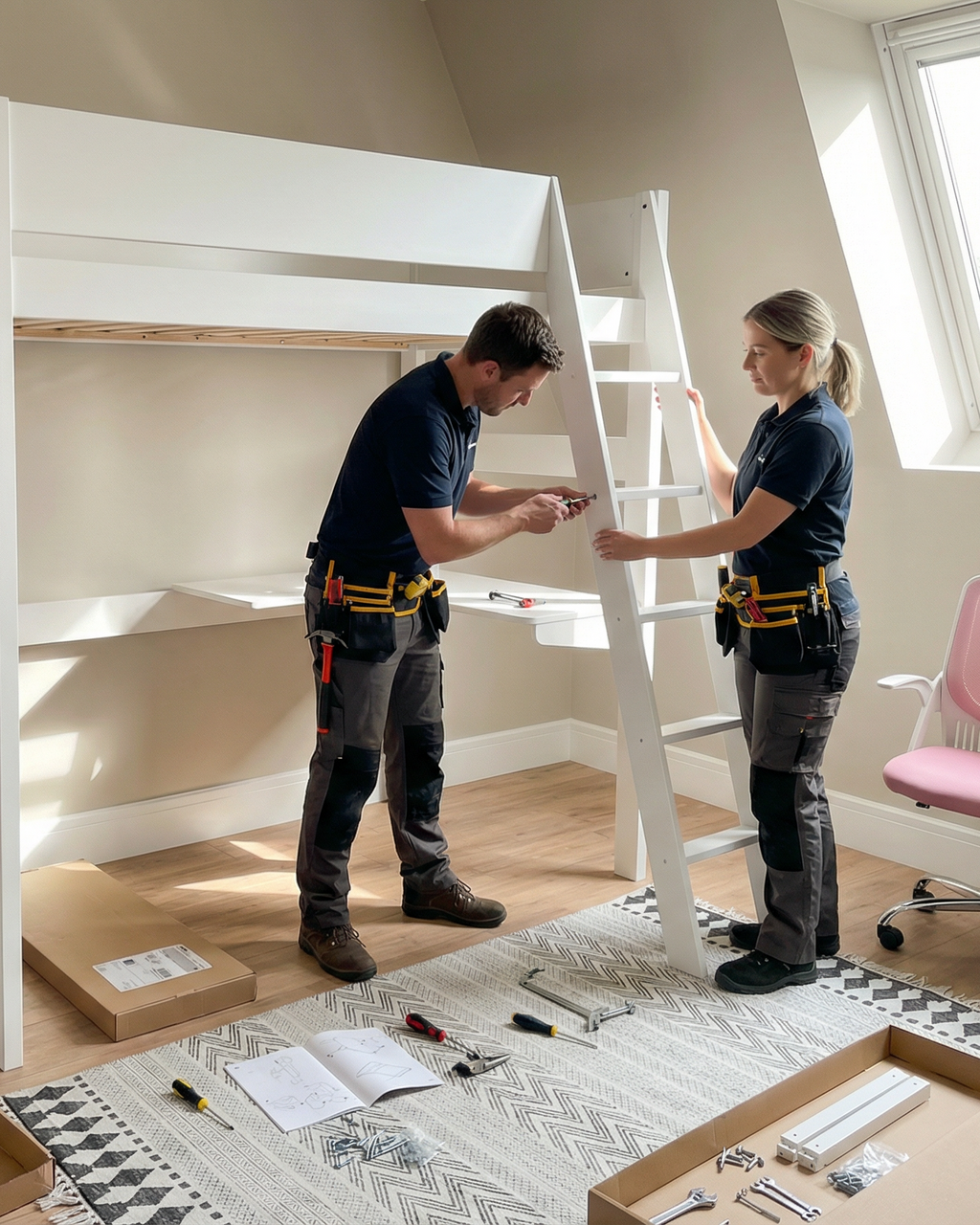
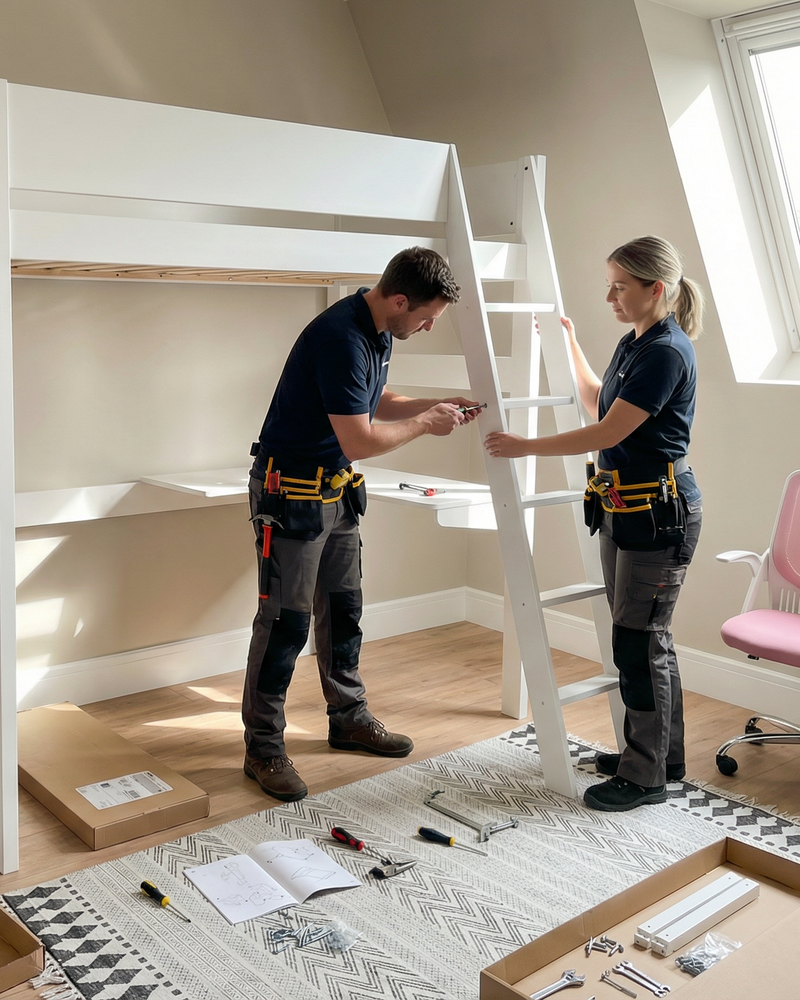
Our high sleeper beds are delivered flat-packed to make it easier to get boxes upstairs and into position. Each bed comes with clear, step-by-step instructions for self-assembly, and all fixings and tools needed are included in the box.
Assembly typically takes between 1.5 and 3 hours for two adults. We recommend unpacking all parts and checking against the inventory list before starting, laying out components in the room where the bed will stay, assembling the main frame before adding guardrails and ladder, and having one person support the structure while the other tightens fixings.
If you'd rather not, our room-of-choice assembly service builds the bed in the room you want it and takes the packaging away.
Position the ladder away from doors, windows or radiators to ensure safe access. Once assembled, check that the frame is level and all bolts are fully tightened before allowing your child to sleep in the bed. Always match the mattress size exactly to the bed base, as an oversized mattress can create safety gaps in high sleepers.
For ongoing maintenance, we suggest routine checks every few months. Re-tighten all bolts and fixings, inspect guardrails for any loosening, and make sure the ladder remains secure. This is especially important with very active children who may put more stress on the frame during play.
How to Decide if a High Sleeper is Right for Your Child
Choosing whether a high sleeper suits your family comes down to understanding how your child currently uses their bedroom and how that might change as they grow.
First, look at room size. Is there at least 2.3m ceiling height? Is there 50 to 60cm clear space for ladder access? Next, consider your child's age. Are they confident climbing ladders? How do they handle night-time toilet trips? Think about their primary need: more desk space for homework, storage for clothes and toys, or a sleepover solution. Finally, consider future plans. Will their needs change significantly in the next two to three years?
When a high sleeper isn't the answer. If the child is under 6, if the ceiling is under about 2.3m or sloped above where the bed goes, if they sleepwalk or have difficulties with balance, or if the room is already big enough, look at a single bed with storage instead. It's also worth knowing that changing the sheets on a high sleeper is genuinely awkward, and it's the most common thing parents tell us they hadn't considered.
As kids' bed specialists, we're here to help you compare models and check details like weight limits or whether a bed can be configured with the ladder on the left or right side.
Ready to find the perfect fit? Read our high sleeper bed guide, or contact our team for personalised advice based on your child's age, room dimensions, and how they'll use the space.
High Sleeper Beds: Common Questions
What is a high sleeper bed?
A single raised bed with usable space underneath for a desk, wardrobe, sofa bed or storage. The sleeping platform typically sits 150 to 180cm off the ground, and the bed takes up the same floor area as a normal single.
What is the difference between a high sleeper and a loft bed?
Nothing. Loft bed is the more common term in the US, high sleeper in the UK. Both describe the same product.
What age is a high sleeper suitable for?
Six and over for the sleeping platform, set by BS EN 747. Younger children are better suited to a mid sleeper or cabin bed.
How much ceiling height do I need for a high sleeper?
At least 2.3 metres. Measure directly above where the bed will stand rather than at the highest point of the room, and check your child can sit up comfortably.
Can you get a double high sleeper?
Some models come in small double at 120 x 190cm. Most are standard single at 90 x 190cm, with continental single at 90 x 200cm available on some frames for taller teenagers.
What mattress does a high sleeper need?
Usually a standard UK single at 90 x 190cm, and no deeper than 15 to 16cm so the guardrails remain effective.
What is the difference between a high sleeper and a mid sleeper?
Height. A high sleeper leaves room for a desk, wardrobe or sofa bed underneath. A mid sleeper is lower, with space for drawers and storage but not a full workspace, which makes it a better fit for younger children and lower ceilings.
Are high sleeper beds good for small rooms?
They're the biggest single gain available, provided the ceiling allows it. The bed goes up and the entire floor area underneath comes back.
How much weight can a high sleeper hold?
Most support between 90 and 120kg, with some heavy-duty frames taking more. The exact limit is stated on each product page.
Can the ladder go on either side?
On some models yes, on others the position is fixed. It's stated on each product page, and it's worth checking before ordering if you're working around a door or window.
How long does a high sleeper last?
Many families find one lasts from around age 6 through to the end of secondary school. The space underneath changes from play to homework to gaming, which is what makes them good value over time.
Is it hard to change the bedding?
It's the most common complaint we hear. Fitted sheets are considerably easier than duvet covers at that height, and worth planning for.


 Hemel Hempstead, UK
 support@millieandjones.co.uk
 020 8264 0042